
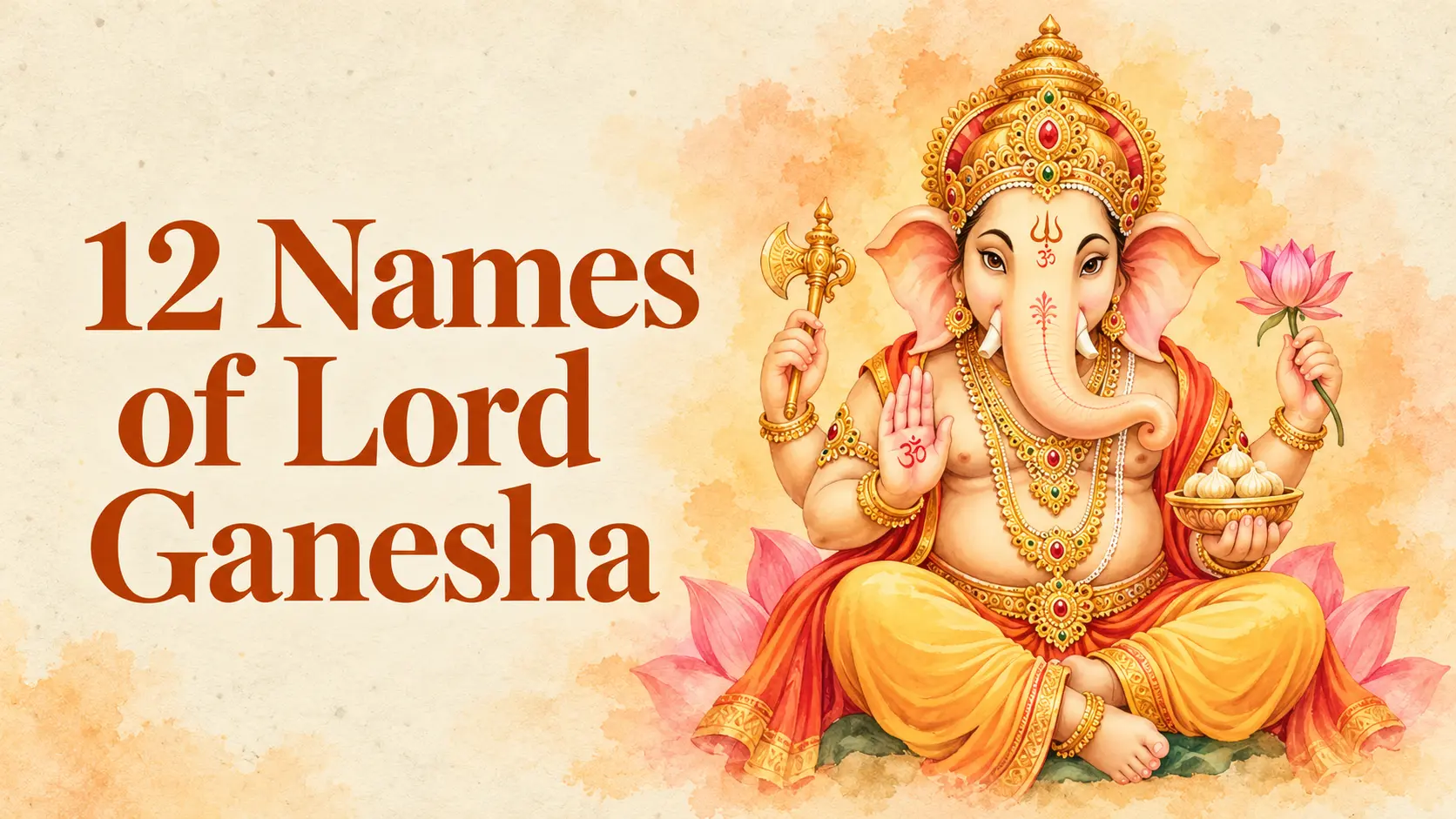
The twelve names of Lord Ganesha, together called the Dwadasha Namavali, are Sumukha, Ekadanta, Kapila, Gajakarnaka, Lambodara, Vikata, Vighnanashaka, Vinayaka, Dhumraketu, Ganadhyaksha, Bhalachandra and Gajanana. Devotees recite these twelve names before starting any new task, during Ganesh Puja, and especially on Sankashti Chaturthi and Ganesh Chaturthi, as each name is believed to invoke a specific quality of Lord Ganesha and remove a specific kind of obstacle.
Unlike the longer 108-name or 1000-name namavalis, the Dwadasha Namavali is short enough to memorise and chant daily in under two minutes, which is why it remains the most widely used Ganesha stotra for beginners and householders alike. Below is the complete list with Sanskrit text, meaning, and the story or symbolism behind each name.
What Are the 12 Names of Lord Ganesha?
The 12 names of Lord Ganesha with their Sanskrit mantras and simple meanings
| Number | Name | Sanskrit Mantra | Simple Meaning |
|---|---|---|---|
| 1 | Sumukha | ॐ सुमुखाय नमः | The Lord with a beautiful and auspicious face |
| 2 | Ekadanta | ॐ एकदन्ताय नमः | The Lord with one tusk |
| 3 | Kapila | ॐ कपिलाय नमः | The tawny or radiant-coloured Lord |
| 4 | Gajakarnaka | ॐ गजकर्णकाय नमः | The Lord with ears like an elephant |
| 5 | Lambodara | ॐ लम्बोदराय नमः | The Lord with a large belly |
| 6 | Vikata | ॐ विकटाय नमः | The Lord with a mighty and unusual form |
| 7 | Vighnanasha | ॐ विघ्ननाशाय नमः | The destroyer of obstacles |
| 8 | Ganadhipa | ॐ गणाधिपाय नमः | The Lord of the Ganas |
| 9 | Dhumraketu | ॐ धूम्रकेतवे नमः | The Lord with a smoke-coloured banner |
| 10 | Ganadhyaksha | ॐ गणाध्यक्षाय नमः | The leader and overseer of the Ganas |
| 11 | Bhalachandra | ॐ भालचन्द्राय नमः | The Lord who bears the Moon on His forehead |
| 12 | Gajanana | ॐ गजाननाय नमः | The elephant-faced Lord |
Origin of the Dwadasha Namavali
The twelve-name namavali comes from the Ganapati Atharvashirsha and related Puranic hymns, where these names appear as a concise invocation used before Vedic rituals, journeys, examinations, business openings and daily worship. Reciting only twelve names, instead of the full Sahasranama, made this stotra practical for everyday use, and it is still the first Ganesha stotra taught to children in most Hindu households.
12 Names of Lord Ganesha With Meanings
1. Sumukha
Sumukha means the one whose face radiates calm and auspiciousness. Even though Ganesha's form combines human and elephant features, tradition describes his face as inherently pleasing because it reflects inner purity rather than outer symmetry. Devotees chant this name first to remind themselves that true beauty is a quality of character, not appearance, before approaching the deity with a settled mind.
2. Ekadanta
Ekadanta refers to the well-known episode where Ganesha broke off one of his own tusks to use as a writing instrument while transcribing the Mahabharata for Sage Vyasa. The single tusk has since become a symbol of one-pointed dedication: the idea that a single, unwavering focus achieves more than divided effort. This is one of the most recognisable and frequently chanted names in the Dwadasha Namavali.
3. Kapila
Kapila describes Ganesha's reddish-brown or tawny complexion, a colour associated in Hindu tradition with the cow and with nourishment. The name is chanted to invoke sustenance, both material and spiritual, and reminds devotees that Ganesha provides for those who approach him with sincerity, much like a cow provides milk without discrimination.
4. Gajakarnaka
Gajakarnaka, or the one with fan-like elephant ears, represents the deity's constant attentiveness to the prayers of his devotees. In iconography, large ears are read as a sign of deep listening and discernment, filtering what is essential from what is not. Chanting this name is traditionally understood as an appeal to be heard clearly and completely.
5. Lambodara
Lambodara literally means the pot-bellied one. Rather than a purely physical description, this name symbolises Ganesha's capacity to absorb and digest the universe, including all its joys and sorrows, without disturbance. It is a reminder that spiritual maturity lies in the ability to process life's difficulties calmly instead of being overwhelmed by them.
6. Vikata
Vikata means unconventional, formidable or awe-inspiring. This name points to the fierce, protective aspect of Ganesha that exists alongside his gentle, approachable side. It is chanted when devotees seek courage and strength to face a genuinely difficult obstacle, not only comfort.
7. Vighnanashaka
Vighnanashaka is arguably the most important name in the entire list, since it directly names Ganesha's primary function: the remover of vighnas, or obstacles. This is the name most commonly invoked at the start of weddings, business ventures, examinations, house-warmings and travel, and it is the reason Ganesha is worshipped first, before any other deity, in almost all Hindu rituals.
8. Vinayaka
Vinayaka means the one who leads without needing another authority above him, a natural guide and master of situations. It is one of Ganesha's most popular names across India and forms the basis for festival names such as Vinayaka Chaturthi. The name is chanted to seek clarity and correct judgment when facing an important decision.
9. Dhumraketu
Dhumraketu refers to a smoky, ash-grey hue associated with fire and transformation. This name connects Ganesha to Agni, the fire that both destroys ignorance and illuminates truth. It is chanted with the intention of burning away confusion, doubt and negative tendencies that block spiritual progress.
10. Ganadhyaksha
Ganadhyaksha means the commander or overseer of the ganas, the attendant spirits and forces of Lord Shiva. This name establishes Ganesha's authority over cosmic order and discipline, and is chanted to invoke organisation, leadership and the ability to manage people or a group effectively.
11. Bhalachandra
Bhalachandra describes the crescent moon resting on Ganesha's forehead, a symbol of coolness, patience and mental steadiness. In a mind agitated by stress or overthinking, this name is chanted to invoke the calm, cooling influence of the moon and restore composure before an important task.
12. Gajanana
Gajanana, the elephant-faced one, is the name most people first learn and is often used as a direct synonym for Ganesha himself. The elephant is associated with memory, wisdom and quiet strength, three qualities this final name asks devotees to cultivate as they close the recitation of the Dwadasha Namavali.
When Should the 12 Names of Lord Ganesha Be Chanted?
The traditional verse connected with the 12 names mentions several important occasions:
विद्यारम्भे विवाहे च प्रवेशे निर्गमे तथा।
संग्रामे संकटे चैव विघ्नस्तस्य न जायते॥
Transliteration:
Vidyarambhe Vivahe Cha Praveshe Nirgame Tatha
Sangrame Sankate Chaiva Vighnastasya Na Jayate
According to this verse, the names may be remembered during:
- The beginning of education
- Marriage ceremonies
- Entering a new home or place
- Starting a journey
- Beginning an important responsibility
- Times of conflict or difficulty
- Situations involving fear or uncertainty
Devotees may also chant these names during daily prayer, on Wednesdays, during Ganesh Chaturthi or before starting any auspicious activity.
How to Chant the 12 Names of Lord Ganesha
No complicated arrangement is necessary for remembering Lord Ganesha’s names. The practice can be kept simple and devotional.
- Bathe or wash your hands and face before prayer.
- Sit in a clean and peaceful place.
- Place an image or Deity form of Lord Ganesha before you if available.
- Light a lamp or incense according to your family tradition.
- Offer a flower with devotion.
- Chant each of the 12 names slowly and clearly.
- Reflect briefly on the meaning of every name.
- Conclude by offering a sincere prayer for wisdom and freedom from obstacles.
The names can be recited once or repeated according to personal practice. Sincerity and attention are more important than chanting mechanically.
Share this article
Help spread awareness about seva and the power of compassionate service.