
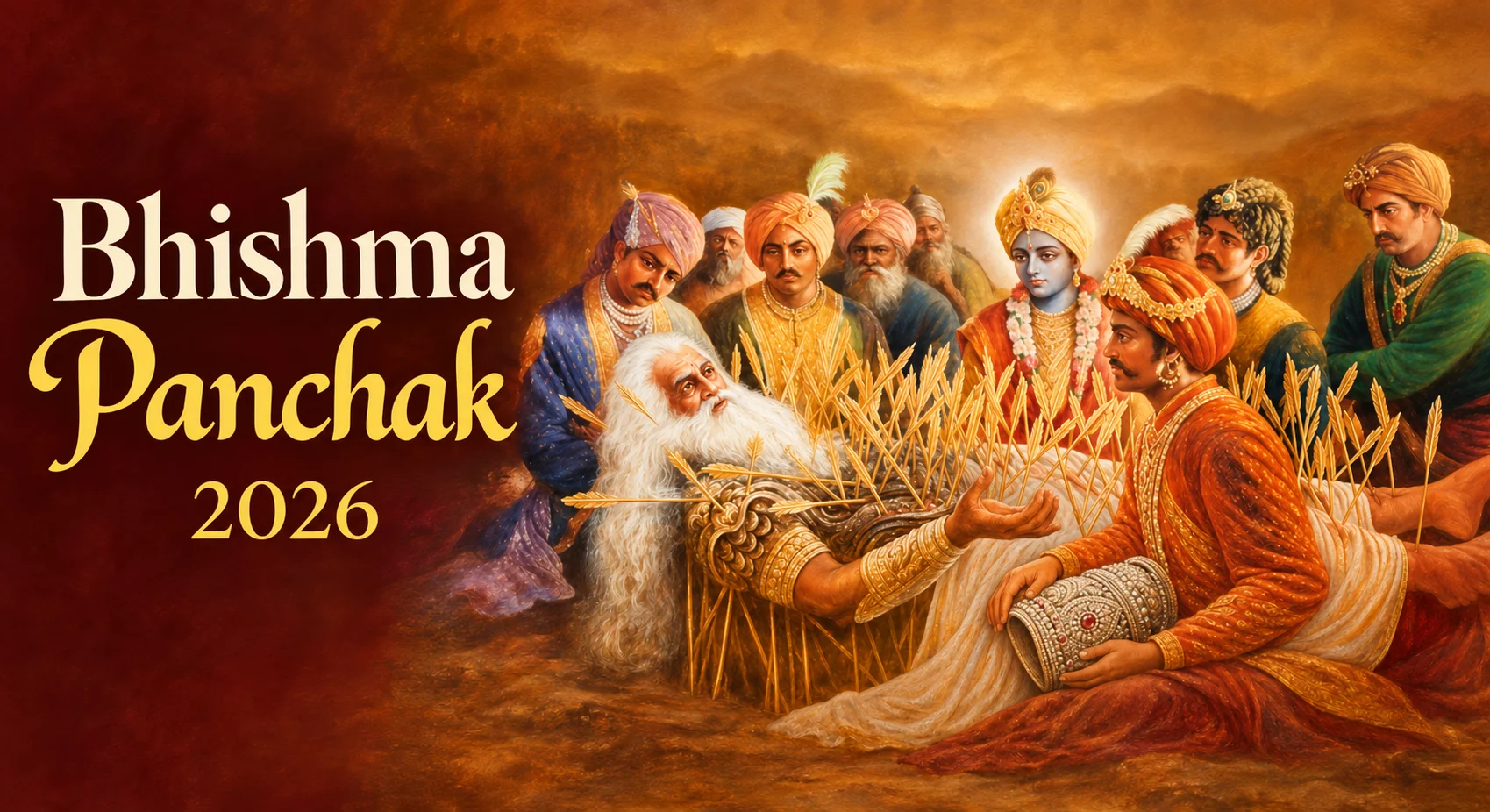
Bhishma Panchak, also known as Vishnu Panchak, is observed for the last 5 days of the Hindu month Kartik, honoring Bhishma Pitamah. From Kartik Shukla Ekadashi to Purnima, devotees observe a five-day vrat believed to bring the merits of the whole Kartik month together.
Traditionally, it is said that Lord Krishna, pleased with Bhishma Pitamah’s unwavering devotion, blessed these five days to be known by his name. Also, this vrat is not compulsory for everyone, and devotees may observe it according to their health and capacity.
But if you plan to, this guide will help you find the Bhishma Panchak 2026 date, rituals, fasting rules, and the significance of observing this sacred period.
When Is Bhishma Panchak in 2026?
| Day | Date (2026) | Tithi Phase |
|---|---|---|
| Day 1 | Friday, November 20 | Kartik Shukla Ekadashi |
| Day 2 | Saturday, November 21 | Kartik Shukla Dwadashi |
| Day 3 | Sunday, November 22 | Kartik Shukla Trayodashi |
| Day 4 | Monday, November 23 | Kartik Shukla Chaturdashi |
| Day 5 | Tuesday, November 24 | Kartik Purnima |
Why Is Bhishma Panchak Associated with Bhishmadeva?
According to the Padma Purana, Bhishma Pitamah, in his final days, surrendered his mind, vision, and words to Lord Krishna while lying on the bed of arrows. Bhishmadeva observed five days of severe penance, and as mentioned in the Srimad Bhagavatam (1.9.32-42), he offered his last prayers, remembering Krishna as his friend and Arjuna’s Chariot driver, rather than praising the Lord’s original Vaikuntha form.
It is also believed that, despite lying on the battlefield, Bhishmadeva gave teachings for five consecutive days on dharma, duty, and pure devotion.
Pleased by all of Bhishma's sacrifice, self-control, and ultimate surrender, Lord Krishna declared the last five days of Kartik to honor Bhishma.
Bhishma Panchak Significance
Bhishma Panchak signifies spiritual learning beyond the material world, making devotion and surrender the ultimate realization for a devotee soul towards the Lord.
1. Brings You Closer to Lord Krishna:
Devotees who observe this 5-day vrat are believed to receive the Lord's blessings and connect with the divine in a loving relationship.
2. Purifies the Heart:
As described in the Padma Purana, this five-day fast is said to remove all the sins and bring everlasting spiritual merits. Observing it with a clear mind and pure heart cleanses negativity.
3. Completes Your Kartik Month Sadhana:
Falling on the last five days of Kartik, Bhishma Panchak offers an opportunity to mark the month's end with deep service and dedication.
4. Simple Living and Self-Control:
By fasting for five days, devotees can overcome bodily comfort and help the mind avoid unnecessary distractions.
5. Remember the Lord in Every Situation:
Even lying on the battlefield, Bhishma Pitamah centered all his focus on Lord Krishna. His pastime during those five days reminds us to remember the Lord throughout our lives.
How to Observe Bhishma Panchak Vrat
Here are the Bhishma Panchak fasting rules classified into three levels. Do as your capacity allows and make your observance truly meaningful and pure:
Types of Bhishma Panchak Fast:
Level 1: (Panchgavya Observance)
In this, you can eat one cow product each day, consisting of:
- Day 1: Cow Dung (Gomaya)
- Day 2: Cow Urine (Go-mutra)
- Day 3: Cow Milk (Kshiira)
- Day 4: Cow Yogurt (Dahi)
- Day 5: All products of the cow mixed
Note: This is a strict observance; follow it only if it suits your health.
Level 2: (Phala-Mula Observance)
If you cannot follow the Panchgavya observance, then you can have seedless fruits, boiled potatoes, raw bananas, and sweet potatoes. You may also use sea salt for taste and avoid milk products.
Level 3: (Havishya Observance)
The third level of fasting in Bhishma Panchak is mentioned in Sri-Hari-bhakti-vilasa (13.10-13), where you eat khichari for five days made with rice, pure cow ghee, sea salt, and milk. Avoid any kind of oil, dal, radish, and cumin.
Daily Practices To Follow:
- Early morning bath
- Sankalpa
- Chanting and Scripture reading
- Water offering and pranam
Conclusion
Bhishma Panchak is a special period that brings humility, devotion, and sincerity in devotees' lives. Whether you follow Panchgavya fasting or observe a simple fruit or Havishya fast for five days, do what you can, as each honors Bhishma Pitamah, fosters bhakti, and strengthens your connection with Lord Krishna.
Share this article
Help spread awareness about seva and the power of compassionate service.