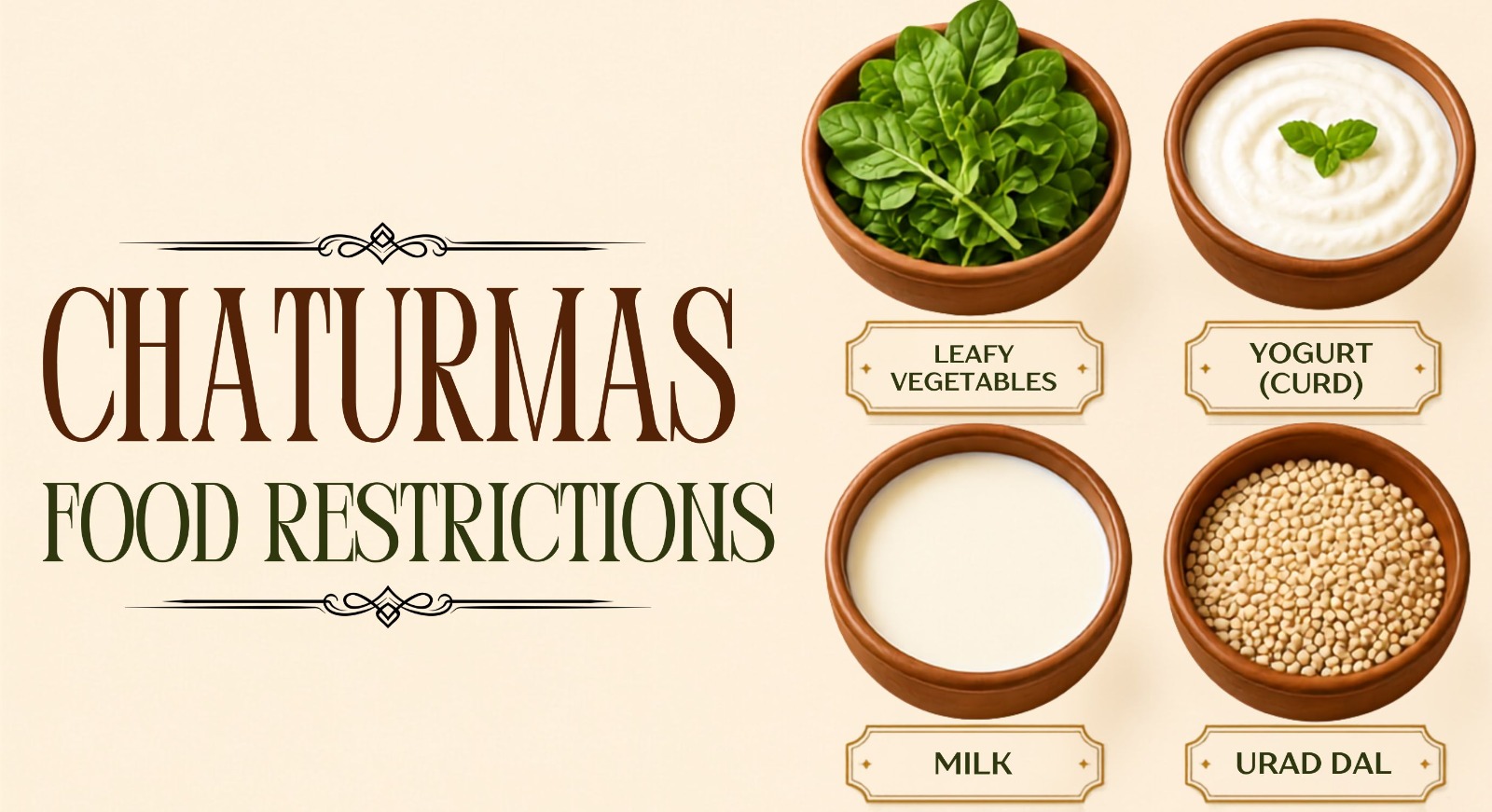
The Chaturmas period is meant to curb material indulgence and guide the soul toward spiritual liberation through fasting, chanting, performing seva, and studying scripture. Moreover, Chaturmas fasting is one of the most widely followed traditions, as it intensifies devotional practices and minimizes self-gratification.
Now that we know what is most important during the Chaturmas period, we should also understand how to observe the fast by properly following all the regulations. This guide will cover every aspect of Chaturmasya fasting, including what to eat, what to avoid, and the key rules and restrictions.
What Foods Are Restricted During Chaturmasya?
Chaturmas is a four-month auspicious period for devotees to practice spiritual discipline by observing month-wise food restrictions and avoiding all types of tamasic foods, including onion, garlic, and alcohol.
| Month | Period (2026) | What to Eat | Chaturmas What Not to Eat |
|---|---|---|---|
| Shravana | Jul 25 - Aug 22 | Coriander, pudina, curry leaves | Methi leaves, cabbage; Spinach (palak), amaranth (chaulai); All green leafy vegetables (Saag) |
| Bhadrapada | Aug 23 - Sep 20 | 1-2 spoons of curd in sabji; Charanamrita (even if it contains curd) | Curd (Dahi), Yogurt lassi; Buttermilk, kadi, raita, pachadi |
| Ashwin | Sep 21 - Oct 20 | Paneer, cheese (transformed milk); Peda, rasagulla, sandesh; Charanamrita | Plain milk, milkshakes, kheer; Ice cream, condensed milk |
| Kartik | Oct 21 - Nov 20 | All other daals (moong, chana, mansoor); Simple sattvic preparations | Urad dal in any form; Idli, dosa, medu vada; Non-vegetarian food |
General Chaturmas Fasting Food List
- Rice and Wheat
- All Fruits
- Moong Daal
- Chana Daal
- Root Vegetables
- Cow’s Ghee
- Rock Sugar (Mishri)
- Tulsi Leaves
- Sendha Namak
General Chaturmas Avoid Food
- Onion and Garlic
- Brinjal (Baingan)
- Non-veg Food
- Alcohol
- Stale Food
- Heavily Spiced Food
- Tobacco
Chaturmas Fasting Benefits: The Ayurvedic Reason Behind the Rules
Ayurveda offers a scientific explanation for why Chaturmas fasting works so well during the monsoon season, revealing benefits that go far beyond spiritual discipline alone.
Below are some of the scientific Chaturmas fasting benefits, along with the reasons that explain the logic behind this practice:
1. The Concept of Agni: Digestive and Physical Benefits
According to Ayurveda and modern medical approaches, high humidity and limited sunlight during the monsoon season may reduce the body’s digestive capacity. By observing Chaturmas fasting, one can help prevent the buildup of toxic waste and reduce gastrointestinal discomfort.
2. Rising Above Material Attachments: Mental Clarity Benefits
By shifting focus away from external and materialistic activities during the Chaturmas period, a person can develop greater awareness and improve stress management. Reducing sensory overload during this period may also support better mental clarity.
3. Community Public Health: Immunity Benefits
By reducing large community gatherings during the monsoon season, the Chaturmas period traditionally helped protect people from exposure to waterborne and airborne diseases. Avoiding crowded gatherings during this season may also reduce the risk of seasonal illnesses.
Exceptions: When Chaturmas Food Restrictions Don't Apply
While the Chaturmas fasting rules include several restrictions, some may be relaxed under certain traditional allowances or for specific groups.
Festival Days: When Restrictions Are Lifted
During major festivals such as Janmashtami, Balarama Purnima, Radhashtami, and Govardhan Puja, all bhoga preparations are first offered to the Lord. Once offered, the bhoga becomes sanctified prasadam, and the usual Chaturmas restrictions may not apply on these specific festival days.
Charanamrita Is Always Exempt
Irrespective of the month or specific restriction, such as curd or milk, charanamrita is always accepted without exception because it is considered to carry the mercy of the Lord. Anything offered to the Lord or received from the Lord is regarded as spiritually sanctified during the sacred period of Chaturmasya.
Small Quantities and Transformed Foods
A small quantity of curd, such as one or two spoons used in cooking to improve the taste of a dish, may not break the vow. Similarly, dairy-based preparations such as peda, rasgulla, and paneer may be permitted during the milk-restricted month because the milk has been transformed into another form.
Health-Based Exceptions
Chaturmasya vrata restrictions may be relaxed for pregnant or nursing women and for individuals following medically prescribed diets. Traditional dharma principles teach that a fast should never be observed in a way that harms one’s health, as the purpose is to cultivate purity and sattvik discipline rather than physical hardship.
Chaturmas Fasting Rules: Key Takeaways
Chaturmas is one of the most spiritually powerful four-month periods in Hindu Dharma. It is dedicated to performing auspicious activities and avoiding certain practices to preserve the sanctity of this sacred period.
Things to Do
- Follow the month-wise sattvic Chaturmas food rules.
- Fast on Ekadashi and other designated days.
- Perform Tulsi worship and charity alongside fasting.
Things to Avoid
- Tamasic foods such as onion, garlic, alcohol, and non-vegetarian food.
- Restricted dairy items according to the monthly rules.
- Overindulgence, even in permitted foods.
Conclusion
According to Vedic scriptures, Chaturmasya fasting is an eternal practice for attaining happiness, peace, and prosperity in life. A person who sincerely observes vrata during this period becomes pious and may experience favorable spiritual and planetary influences.
From avoiding green leafy vegetables during Shravana to carefully following the dairy restrictions of Bhadrapada and Ashwin, every monthly discipline has its own significance. However, all these practices ultimately lead toward the same goal of spiritual purity and self-realization.
FAQs
Share this article
Help spread awareness about seva and the power of compassionate service.