
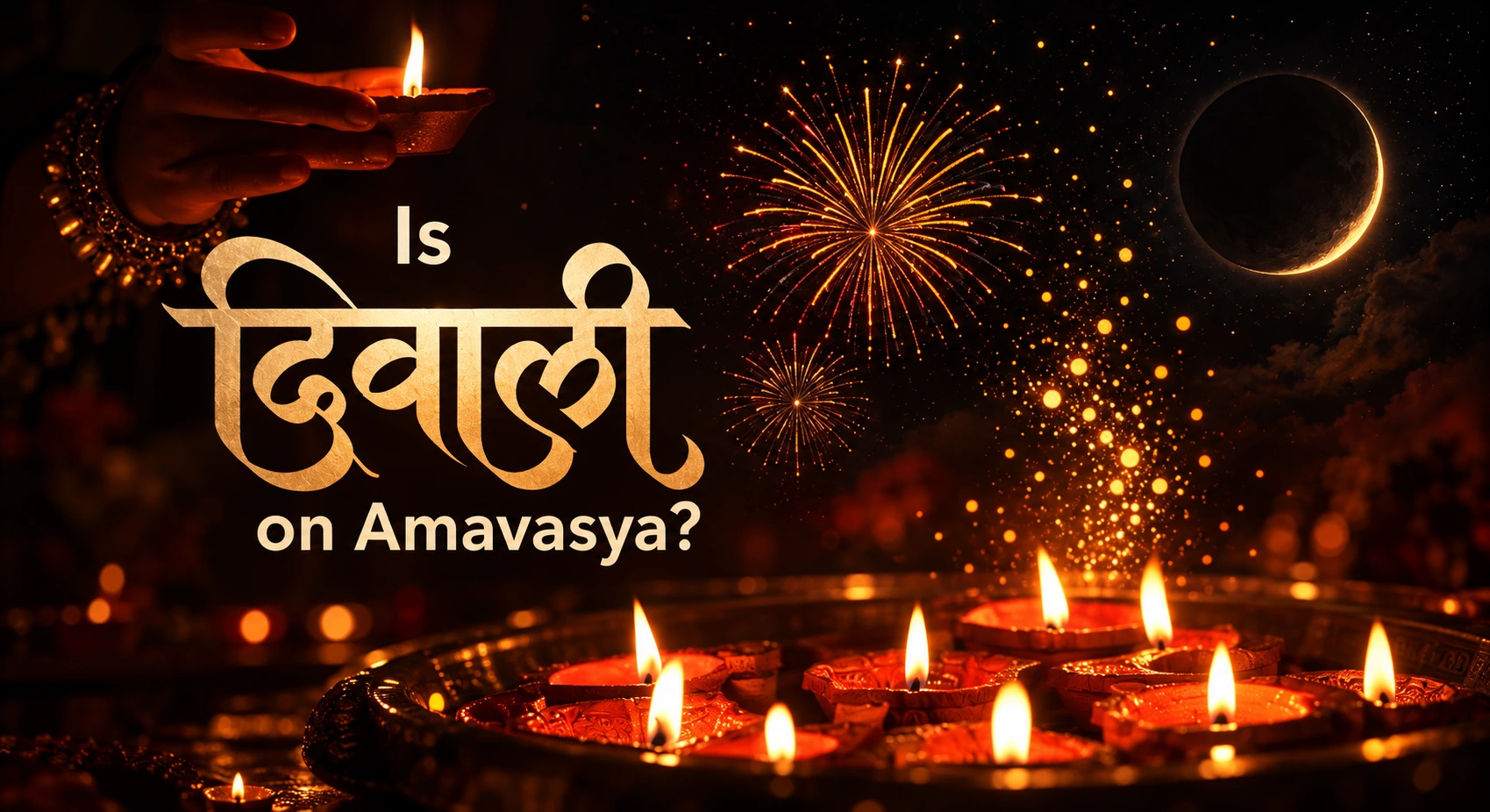
Many people wonder why Diwali falls on Amavasya, even if it is the darkest night of the month. Most Hindu festivals fall under the Moon’s glow, yet the festival of lights is observed in its complete absence.
So, in this short guide, let’s explore the connection between Kartik Amavasya and Diwali.
What Is Amavasya?
The word Amavasya means "dwelling together," meaning the time when the sun and moon are in the same house. Amavasya is revered as the new moon day in the Hindu lunar calendar, marking the 15th or final day of the dark fortnight (Krishna Paksha). During this time, the moon is fully invisible from Earth.
Why Is Diwali Celebrated on Kartik Amavasya?
Diwali is celebrated on Kartik Amavasya because, traditionally, people believe that on this new moon night, Goddess Lakshmi visits clean, well-lit homes filled with devotion. Amavasya is usually seen as a quiet, inward day, but on Diwali it becomes a night of welcome and new beginnings.
The same night marks Lord Rama’s return to Ayodhya after fourteen years of exile, when people welcomed him with rows of diyas. People also remember Lakshmi’s appearance during the churning of the ocean.
Why Are Diyas Lit on the New Moon Night?
On Amavasya, there is no moonlight, so the lit diya becomes the light we offer ourselves. It symbolizes the victory of light over darkness and of knowledge over ignorance, a small flame that reminds us to bring goodness into our own hearts.
Diyas are also an offering of devotion. Kartik is the month of deepdaan (lamp offering), and a lamp lit with faith in this month is believed to bring divine grace. Together, rows of diyas turn the darkest night into a night of hope and devotion.
How Is the Diwali Date Determined Each Year?
Diwali follows the Hindu lunar calendar, so its date changes every year, usually falling in October or November. The date is determined by the new moon, i.e., observed when Amavasya, the new moon tithi, falls after sunset.
Sometimes Amavasya starts on one day and ends on the next. In that case, the panchang follows a fixed rule to choose the evening, so the date can differ slightly between cities. Always check your local panchang. In some regions, this same night is called Ashwin Amavasya, but it is the same Diwali night.
Conclusion
Now that you know why Diwali falls on Amavasya, let’s celebrate the festival with more lights and diyas than ever. Perform Lakshmi puja with your family, and observe the festival with utmost grace and devotion.
Happy Diwali!
Share this article
Help spread awareness about seva and the power of compassionate service.