
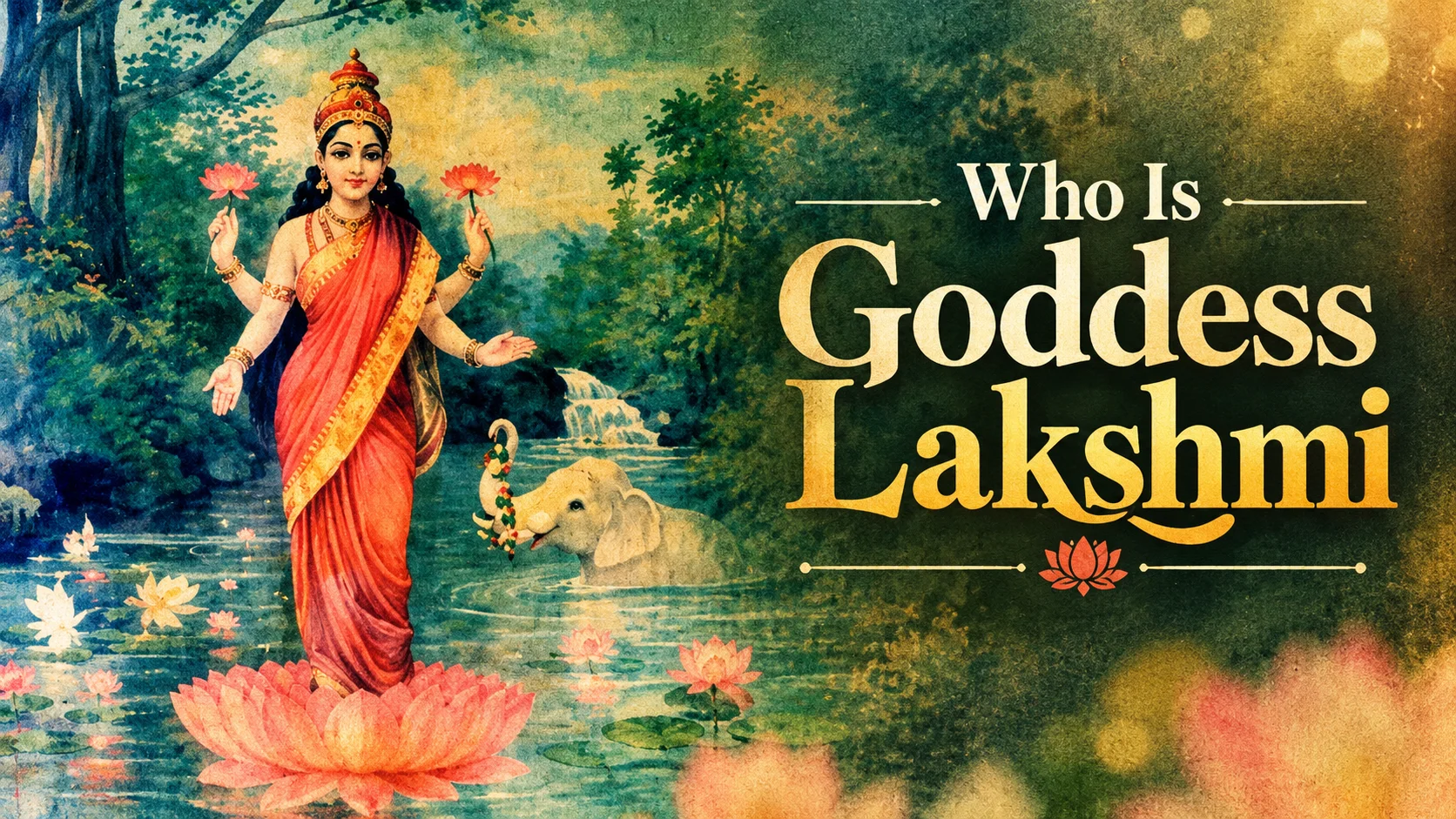
Ever thought about the Goddess worshipped for inviting wealth, prosperity, wisdom, and fortune into life? Goddess Lakshmi is a Hindu deity worshipped especially during Diwali and revered as Shri.
This short guide answers who is Goddess Lakshmi and explains her meaning, significance and eight forms (Ashta Lakshmi).
Who Is Goddess Lakshmi? Meaning of Her Name
Goddess Lakshmi is the eternal consort of the Supreme Lord Vishnu. According to the Vishnu Purana (chapter 8), Goddess Lakshmi is described as the embodiment of achieving goals. Her name comes from the Sanskrit word Laksh (to perceive).
She is one of the Tridevi, representing prosperity, alongside Goddess Saraswati (ultimate knowledge) and Goddess Parvati (ultimate shakti).
In the Rig Veda (Sri Suktam), Goddess Lakshmi is called Hiranyavarnam (golden-hued), reflecting her as true fortune and the fulfillment of all worldly desires.
What Does Goddess Lakshmi’s Form Symbolize?
Goddess Lakshmi is often depicted seated on a lotus or holding one, symbolizing purity and spiritual awakening. Her four hands reflect the four goals of human life (Purusharthas): Dharma (righteousness), Artha (prosperity), Kama (desire), and Moksha (liberation).
Significance of Goddess Lakshmi in Hinduism
The Vishnu Purana clearly explains Goddess Lakshmi's significance as the ultimate source sustaining all creation in this world. Usually worshipped with Lord Kubera and Lord Ganesha as the wealth deities.
Her nature is traditionally believed to teach that true wealth stays only with hard work, moral conduct, and honesty; greed and laziness drive Lakshmi away.
Ashta Lakshmi: The Eight Forms of Goddess Lakshmi
The Ashta Lakshmi are the divine eight manifestations of Goddess Lakshmi; each is explained below:
- Adi Lakshmi: The Primary form, who bestows spiritual wealth, grace, liberation (moksha).
- Dhana Lakshmi: The giver of material abundance, gold, and wealth.
- Dhanya Lakshmi: The provider of food grains, nourishment, usually dressed in green.
- Gaja Lakshmi: The royal form reflecting high status and dignity.
- Santana Lakshmi: The giver of healthy family lineage and domestic well-being.
- Veera Lakshmi: The empowerer of inner peace, bravery, and resilience to overcome life obstacles.
- Vijaya Lakshmi: The symbol of victory and success in all paths of life.
- Vidya Lakshmi: The bestower of knowledge in academics, spirituality, and arts.
Conclusion
Now that you know who Goddess Lakshmi is, worship her with a pure heart and sincerity, and seek her divine blessings for a healthy, prosperous life ahead. Chant Lakshmi mantras and Lakshmi aarti to offer your gratitude to all eight of her forms in a more devotional way.
Share this article
Help spread awareness about seva and the power of compassionate service.