
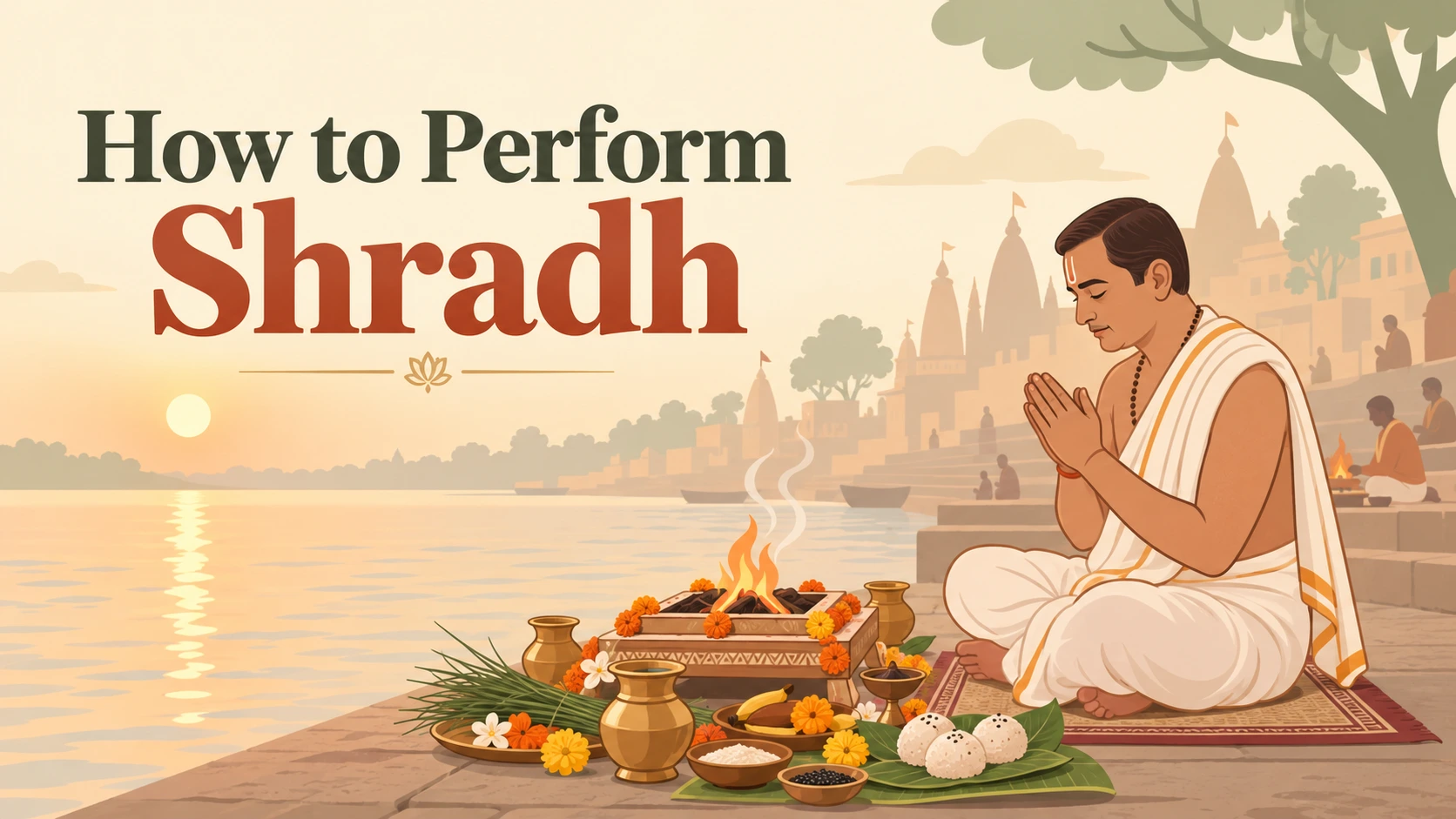
Shraadh (Shradh) is a Hindu ritual that directly honors and remembers our ancestors. It is believed that after death, the souls of our loved ones need our help to attain liberation, so we perform the Shradh rites during Pitru Paksha.
Observed in the lunar month of Bhadrapad, between September and October, in 2026, it will start on September 26 and will end on October 10. Also known as Mahalaya Paksha, this fortnight is the best time to please our ancestors and attain their blessings.
This guide will help you learn how to perform Shradh and its puja vidhi, including key rituals, so you can help your dear ancestors and receive their protection. And those who cannot perform the rituals themselves can help someone in need, which is equivalent to performing this ritual.
Meaning and Significance of Shradh
The word Shradh originates from the Sanskrit language, combining two words: shrat (faith) and dha (direct mind towards), meaning to have faith or to place the mind upon something.
The Shradh ritual is a way to repay the debts of our ancestors, so they can attain a good afterlife (sadgati). This also serves as a link connecting the past, present, and future, reflecting the true nature of birth and death.
सत्त्वानुरूपा सर्वस्य श्रद्धा भवति भारत। श्रद्धामयोऽयं पुरुषो यो यच्छ्रद्धः स एव सः॥ - Bhagavad Gita (Chapter 17, Verse 3)
This verse from the Bhagavad Gita (Chapter 17, Verse 3) reminds us that a person's faith (Shradh) reflects their very nature and being.
It is this same spirit, this faith and devotion, that we bring into the Shradh ritual during Pitru Paksha; we help our ancestors reach the Lord with the combined support of Vasu (Father), Rudra (Grandfather), and Aditya (Great-Grandfather).
Benefits of Performing Shradh Ceremony
There are several advantages that come from performing the Shradh in Pitru Paksha:
- Help ancestors' souls to find peace and attain shelter in the abode of God.
- Removes obstacles linked to Pitru Dosha, bringing harmony and happiness in the family.
- Brings prosperity, protection, and good fortune to the household.
- Strengthens family bonds through ritual performance.
- Empowers values and respects the younger generations.
- Keeps the ancestral traditions and family roots alive for years to come.
Shradh Samagri List
For performing the Shradh puja, you will need some of the essential items through which the ceremony is conducted:
- Clean water
- Flowers
- Incense sticks
- Diya
- Ghee
- Fresh fruits
- Coconut
- Betel leaves
- Black sesame seeds
- Barely (jau)
- Thread
- Water pot and plate
- Puja Thali
- Dakshina for Brahmins (money and cloth)
- Sandalwood paste
- Ganga Jal
- Uncooked rice
- Kusha grass
- Cotton
Shradh Puja at Home (Pitru Paksha Shradh Puja Vidhi)
Follow these steps to perform the Shradh ceremony at home with faith and purity.
- 01
Clean the puja area
·पूजा स्थानTake a bath, and then clean your puja room where the Shradh ritual will be performed. Light an incense stick and place the photo frame of the ancestors in the south direction, for whom the ritual will be performed.
- 02
Take sankalpa
·संकल्पNow, after cleaning, start preparing for the ceremony. Gather all the puja items, then take an oath in the name of your ancestor's name and family lineage on a specific tithi, according to your local panchang.
- 03
Offer tarpan
·तर्पणFace south, fold your hands, take a small water pot, black sesame seeds, and any other materials required by your family rituals, and offer them to your ancestors with pure intent and faith.
- 04
Offer food, prayers, and Brahman Bhojan
·भोजनPrepare pure sattvic food without onion or garlic, then offer it to the ancestors with prayers, as per your family tradition. After this, feed the priests and brahmins, give them dakshina, and take their blessings. In some families, Pind is also offered, so check with your family priest if you need to do this.
- 05
Donate and feed
·दानFeed cows and crows and donate necessary items to needy families in remembrance of your ancestors. It is believed that this offering goes directly to your ancestors, bringing their blessings and mercy upon you.
- 06
Conclude the Shradh ceremony
·समापनAfter performing all the rituals, seek forgiveness for any unintentional mistakes made during the ceremony. Then ask ancestors for their blessings; this completes your Shradh Puja vidhi for the day.
Note: These puja steps may vary depending on your family rituals, regional observances, and sampradayas, so please check with an elder family member or priest.
What to Do and Avoid During Shradh
Key practices to follow and avoid during Pitru Paksha
| WHAT TO DO | WHAT TO AVOID |
|---|---|
| Maintain a calm, respectful, and sattvic lifestyle throughout the fortnight | Non-vegetarian food, onion, garlic, and alcohol |
| Treat cows, dogs, and crows with kindness whenever they visit your home | Starting new ventures or buying new items like vehicles or property |
| Show respect to elders and follow your family's customs and traditions | Celebrating auspicious events like weddings or housewarmings |
| Keep your home and surroundings clean throughout Pitru Paksha | Cutting hair, nails, or shaving during this period |
| Use copper, silver or bronze utensils in puja | Using iron vessels or leather items during the ceremony |
| Perform the rituals before noon, in Kutup Muhurat | Performing Shraddh in the evening or night |
| Speak kindly and avoid conflicts or harsh words during the fortnight | Getting distracted or talking to others mid-ritual |
FAQs
Conclusion
Shradh is more than just a ritual; it is a great opportunity to show love and serve our ancestors in their afterlife. So, by knowing how to perform Shradh at home, following every sacred ritual, you can achieve the utmost blessings and offer liberation to your ancestors.
Remember, what matters most is your sincerity and faith behind the offering, as the Pitru Paksha Shradh rituals are meant to fulfill the left-behind desires of your loved ones, so that they can attain liberation.
Share this article
Help spread awareness about seva and the power of compassionate service.