
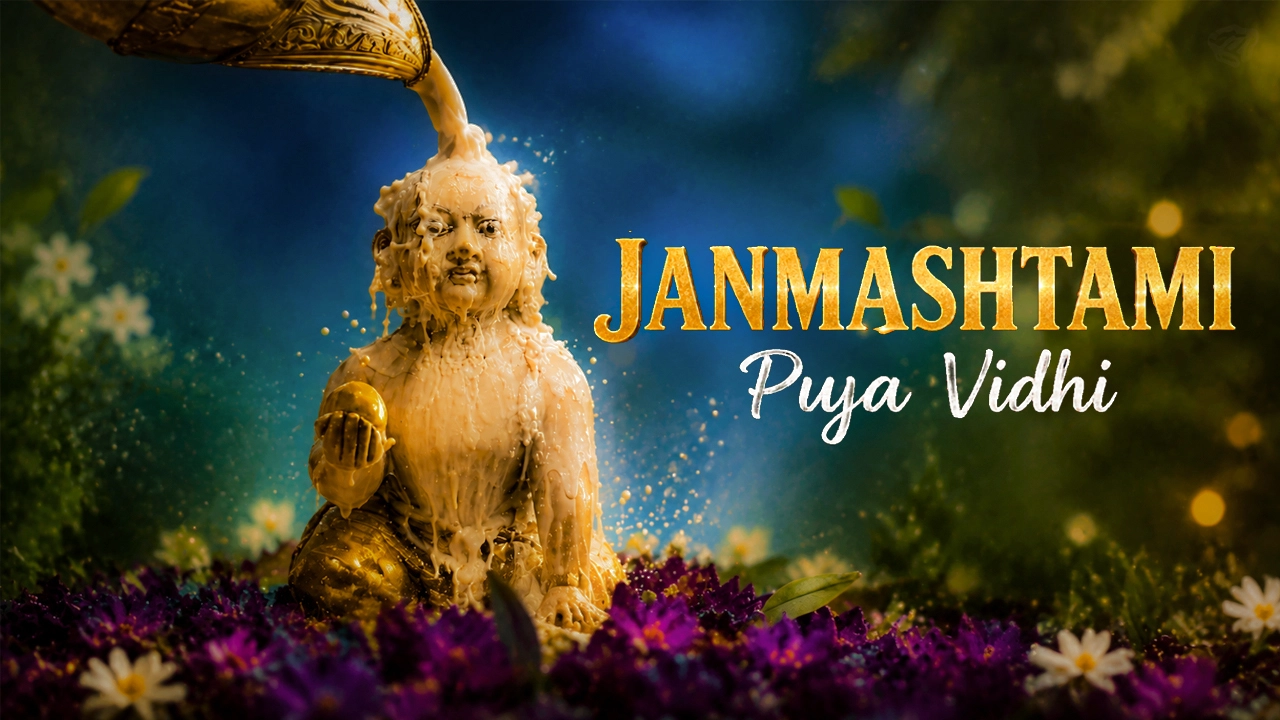
The Janmashtami Puja Vidhi at home begins with arranging the worship space and required samagri before the midnight puja. The main observance includes taking a sankalp, bathing Bal Gopal with water and Panchamrit, offering fresh clothes and ornaments, presenting Tulsi and naivedya, and completing the worship with Janmashtami aarti. Follow this step-by-step puja vidhi to perform each ritual in its proper order at home.
Essential Janmashtami Puja Samagri List
Before starting the rituals, it is important to gather all the required Janmashtami puja items
- Bal Gopal Deity
- Clean cloth and chowki
- Clean water
- Panchamrit — milk, curd, ghee, honey, and sugar
- Achaman pot
- Tulsi leaves
- Flowers
- Chandan (sandalwood paste)
- New clothes for Bal Gopal
- Bhog — fruits, makhan-mishri, or sweets
- Diya, incense, and camphor for the aarti
Traditional Janmashtami Puja Steps to Follow
To perform the Krishna Janmashtami puja with absolute devotion, follow these simple, step-by-step rituals with your family members at home:
Preparing the Puja Place and Bal Gopal
Before beginning the Janmashtami Puja, clean the place where the worship will be performed and keep the surroundings neat, quiet, and peaceful. Place a wooden chowki (raised platform) on the cleaned spot and cover it with a fresh, clean cloth.
Respectfully place the Bal Gopal Deity on the chowki and keep your Janmashtami puja samagri arranged nearby. Before touching the deity, purify yourself by performing achaman (sacred sipping of water) while chanting the holy names of the Lord.
Sankalp and Beginning the Janmashtami Puja
Sit in a clean place facing East or North to begin your Janmashtami puja at home. Take some water, akshata (rice), and a flower in your right palm, and recite your intention. State your name, the current date and tithi, the deity you are worshipping, and the spiritual purpose of the puja. Chant the sankalp mantra and gently release the water, rice, and flower onto the ground or into a small plate before the Deity, completing the vow.
Before starting, it is highly recommended to understand the proper fasting guidelines. You can read our detailed guide on Janmashtami Fasting Rules: How to Observe Krishna Janmashtami Vrat to prepare yourself spiritually.
Once the sankalp is complete, offer a sincere prayer to Shri Krishna, begging for His divine mercy. Light the diya and incense, offer fresh flowers and Tulsi leaves to Bal Gopal, and respectfully begin the worship with a peaceful, focused mind.
Krishna Abhishek and Panchamrit Snan
After offering the initial prayers, proceed with the holy Krishna abhishek on Janmashtami. Begin by gently bathing the Deity first with clean water. Then perform the sacred Panchamrit Snan by bathing Him with milk, curd, ghee, honey, and sugar water one by one. Perform each step respectfully and with devotion, remembering that the abhishek is an offering of loving service to Shri Krishna.
After the Panchamrit Snan, bathe Bal Gopal again with clean water (preferably Gangajal) to complete the abhishek, and gently dry Him with a soft, clean cloth. While performing the sacred bathing, chant the holy names of Shri Krishna, such as the Hare Krishna Mahamantra, and keep the mind focused on His divine form. The Panchamrit used for the abhishek can be collected as charanamrit and respectfully honored by the devotees.
Shringar, Tulsi, and Other Offerings to Krishna
Once Bal Gopal is dried completely, dress Him in His new, beautiful festival clothes. The shringar of the deity should be made with suitable ornaments, a flower garland, and chandan (sandalwood paste). While performing the shringar, maintain the mood of serving Him with sincerity and complete surrender.
Next, offer Naivedya (food prepared for Bal Gopal) with fresh Tulsi leaves placed on each preparation. Tulsi holds a special place in the worship of Shri Krishna, and devotees traditionally offer it with His bhog. Other suitable offerings, such as sandalwood paste and flowers, may also be presented before the Deity. Make sure that all offerings are clean and fresh before offering them to Shri Krishna.
Bhog, Mantras, and Janmashtami Aarti
Start offering the delicious preparations made of milk, ghee, butter, mishri, dry fruits, and rice. Keep the bhog before the deity for a few minutes while offering the Mantras. During the bhog offering, chant the Hare Krishna Mahamantra or other prayers dedicated to Shri Krishna.
As you offer prayers and make your offerings to Bal Gopal at home, you can also extend your devotion. Learn more about What to Donate on Janmashtami? Best Daan and Seva to Offer to support temple sevas and distribution of prasada.
Once the bhog has been offered, proceed with the grand Janmashtami aarti. Perform the aarti with a ghee lamp, incense, flowers, and camphor while ringing the bell and singing the traditional aarti.
Completing the Puja and Distributing Prasad
After the Janmashtami Aarti, complete the puja by offering a final prayer of gratitude to Shri Krishna and seeking His blessings. You may offer pushpanjali (handful of flowers) and respectfully bow before Bal Gopal to mark the completion of the main puja.
At last, collect the offered bhog and distribute it among family members and other devotees as prasada. Distribute the charanamrit, which is glorified in scriptures as removing untimely death and freeing one from all kinds of diseases (Hari-bhakti-vilasa). Prasada should be received respectfully as the Lord's mercy rather than treated simply as ordinary food.
FAQs
Conclusion
The Janmashtami Puja Vidhi is simple and can be performed at home with the proper understanding of each step. From arranging the puja samagri and taking the sankalp to performing abhishek, shringar, offerings, mantras, and aarti, each part has its place in the worship. The puja concludes with offering and distributing prasada to the devotees.
Share this article
Help spread awareness about seva and the power of compassionate service.