
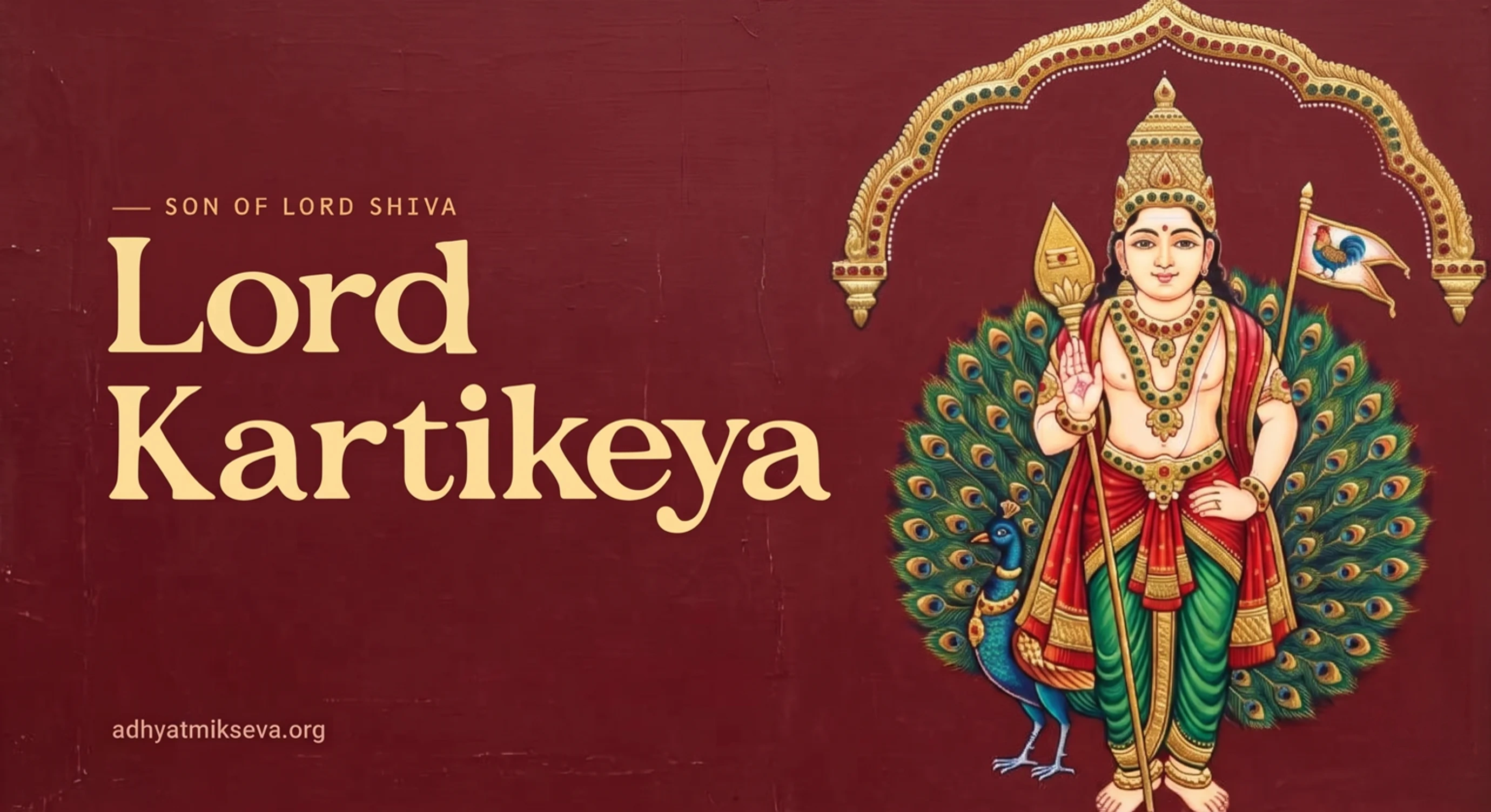
Who is Lord Kartikeya, the divine warrior also known as Skanda, Murugan, and Subramanya? He is the son of Lord Shiva and Goddess Parvati and is revered as the commander of god’s army (Dev Senapati).
Devotees worldwide worship him to seek blessings for courage and wisdom. From his birth to victory over the demon Tarakasura, his pastimes are truly memorable.
In this blog, we will explore who Lord Kartikeya is, covering his birth story, the meanings of His names, and the symbolism of His worship. Let’s start with His divine birth story.
The Story of Lord Kartikeya’s Birth
Long ago, a very fierce demon, Tarakasura, gained a powerful boon from Lord Brahma; that he could be killed only by Lord Shiva’s son. As the demon knew Lord Shiva was an ascetic and would never have children, he thought he was invincible.
So, according to the Skanda Purana, Lord Kartikeya’s birth story was driven by the need to kill the demon Tarakasura. Terrified by the demon's oppression across the three worlds, the gods grew worried and planned to awaken Lord Shiva from his meditation so he could meet Goddess Parvati and marry her. To do this, Indra (the King of the Gods) assigned this work to Kamadeva.
Confident in his power, Kamadeva shot an arrow at Lord Shiva, waking him from his meditation. Because of the sudden interruption, Lord Shiva grew angry and opened His third eye, which burned Kamadeva to ashes.
After some time, Lord Shiva was impressed by Goddess Parvati's penance and devotion towards him, and agreed to marry her. But after thousands of years of meditation, his divine energy grew stronger and burned like a flame. Then Agni (the Fire God) took that divine energy, but since he could not hold it, he dropped it into the Ganga River.
Later, when Ganga could not bear the pain and burning of the energy, she left it in a lake in the forest of reeds called Sara Vana. After some time, Lord Kartikeya was born from that energy with six faces, as the son of Lord Shiva and Goddess Parvati, but not as a normal child born from the womb. Later, six Krittikas nurtured and cared for him, and he took the name Kartikeya.
Different Names of Lord Kartikeya and Their Meanings
Here are the regional and traditional names of Lord Kartikeya and their meanings.
| Name | Meaning |
|---|---|
| Kartikeya | “Born of the Krittikas”, the six Krittika mothers who raised him |
| Skanda | From the root “skand”, meaning to leap or attack, showing his swift warrior nature |
| Murugan | Handsome, also read as youthful and beautiful |
| Kumara | Youthful, the eternally young divine child |
| Subrahmanya | “Dear to Brahman”, linked to divine knowledge (some sources give “transparent”) |
| Shanmukha/ Arumugam | “One with six faces” |
| Saravanabhava | Born in the Sara Vana, the forest of reeds |
| Guha | The one who dwells in the cave of the heart (the Upanishads refer to Guha as the indweller) |
| Swaminatha | Ruler of gods |
| Senthil | Victorious |
| Velan/ Velayudha | Wielder of the Vel, the divine spear |
| Devasenapati/ Deva Senapati | Commander of the army of the gods |
| Mahasena | The great commander |
| Tarakari | Slayer of the demon Tarakasura |
| Dandayudhapani | The staff-bearing form worshipped at Palani |
What Do Lord Kartikeya’s Symbols Represent?
Lord Kartikeya is depicted with six faces as a youthful warrior, riding a peacock, holding the Vel, and a rooster on his flag, adorned with divine ornaments. Each symbol is described below:
1. Six Faces:
Lord Kartikeya's six faces represent complete knowledge and awareness in every direction. In some traditions, five are described as elements of the material world, and the sixth as pure consciousness of the human mind. This symbolizes ultimate wisdom and understanding.
2. Vel (Spear):
The spear is Lord Kartikeya's divine weapon and represents courage, fearlessness, and the destruction of ego and ignorance. Devotees see it as a power that removes inner obstacles and negative energy.
3. Peacock:
The peacock is his divine vehicle and symbolizes pride, calmness, and control. Some people believe it signals good's victory over evil and the destruction of bad influences in the outside world.
4. Rooster Flag:
The rooster on his flag reflects the defeat of ego, kept under the Lord’s feet. It reminds devotees to follow dharma and act at the right time.
How Did Kartikeya Become the Commander of the Gods?
After Lord Kartikeya’s birth, the gods, opperessed by the demon Tarakasura's destruction, looked to Kartikeya as their only hope. In scriptures like the Mahabharata and Shiv Purana, it is described how Lord Indradev and other demigods appointed Lord Kartikeya as the gods' commander.
It is believed that even in his youth, Lord Kartikeya showed extraordinary wisdom, masculine prowess, and utmost brilliance, which led him to become the supreme general and authority of the gods. It is also said that Goddess Parvati granted him divine power, and other gods blessed him with supreme weapons in honor.
Kartikeya and Tarakasura Story
Lord Kartikeya brilliantly led the army of gods against the demon Tarakasura. The battle was fierce, and Kartikeya fought with divine strength and clear purpose, defeating the demon and ending terror across the three worlds.
With Tarakasura’s defeat, the gods regained their positions, and the cosmic balance was restored. This victory is honored as the defeat of evil and the win of good over the negative influences and ego.
Is Lord Kartikeya Married?
Yes, Lord Kartikeya is married. In the Mahabharta and the Puranas, he is said to be married to Devasena (also known as Devayanai or Deivanai), the daughter of Lord Indra. In Tamil scriptures like the Kanda Puranam, Lord Kartikeya had two consorts: Devayanai as his celestial wife and Valli as his tribal wife on Earth.
However, regional stories depict Lord Kartikeya as having no wives; he practiced celibacy from childhood and vowed never to marry.
Why Is Lord Kartikeya Associated with Palani?
Lord Kartikeya is associated with Palani because of a legendary race between him and his brother Ganesha. It is believed that one day, Sage Narada visited Mount Kailash with a fruit of knowledge (Gnana Pazham) and gave it to Lord Shiva and Goddess Parvati. As the fruit could not be divided, Lord Shiva and Parvati decided to give it to their son, who would cover the whole universe first.
Lord Kartikeya immediately sat on his vehicle and went to cover the whole universe, but Lord Ganesha realized the whole universe was made of his father and mother, so he quickly took three rounds around them, won the race, and won the fruit.
Hurt by his loss and feeling treated unjustly by his father and mother, Lord Kartikeya left Mount Kailash, went to the Palani Hills, and lived there as an ascetic. Since then, the Palani Hills have been known as one of the six Arupadai Veedu abodes of Lord Kartikeya.
Lord Kartikeya’s Worship and the Significance of Shashthi
In Puranic tradition, Lord Kartikeya is believed to have been born on the Shashthi Tithi (sixth day) of the lunar fortnight to fulfill a divine purpose. It is said that on this same day, he defeated powerful demons such as Tarakasura and Surapadman.
To honor him, Devotees observe Skanda Shasthi (October - November) or Subrahmanya Shashthi fast (November - December), one dedicated to his victory over the demon Surapadman and the other to his divine appearance. For worship, devotees visit the Dandayudhapani Swamy temple or offer abhishekam to the Kartikeya idol with Panchamrit, pray to his Vel, and chant sacred mantras like Om Saravanabhavaya Namah.
FAQs
Conclusion
Now that you know who Lord Kartikeya is and his association with the demon Tarakasura and the Palani Hills, embody his teachings in your life. From his birth to his courage to his knowledge, Lord Kartikeya's nature offers an ideal way to live on the spiritual path.
Whether to keep the Shashti fast or just worship him with pure devotion, remember to maintain sincerity and faith.
Share this article
Help spread awareness about seva and the power of compassionate service.