
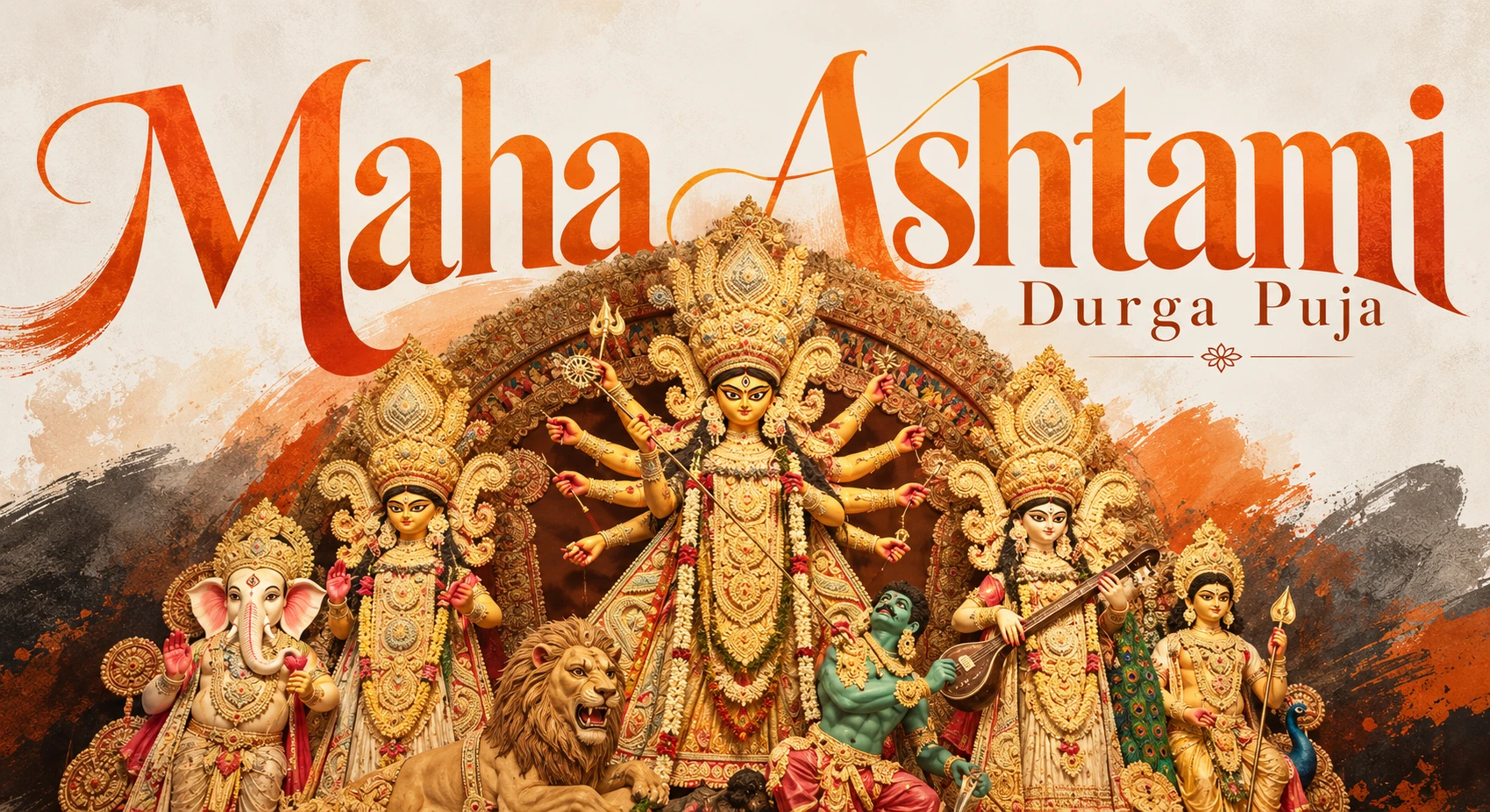
Maha Ashtami Durga Puja will be observed on Monday, 19 October 2026, during Shardiya Navratri. Devotees offer prayers to Maa Durga through Pushpanjali, bhog and aarti, while temples and pandals conduct elaborate ceremonies according to their traditions.
When preparing for Navratri Ashtami Puja, one question can cause confusion: if Ashtami Tithi begins on 18 October, why is the festival observed on 19 October? Understanding the tithi and its connection with sunrise helps clarify the date. This guide explains the timings, Sandhi Puja, regional observances and simple worship at home.
When Is Maha Ashtami in 2026?
| Observance | Date and Time |
|---|---|
| Maha Ashtami Durga Puja | Monday, 19 October 2026 |
| Ashtami Tithi begins | 18 October 2026 at 8:27 AM |
| Ashtami Tithi ends | 19 October 2026 at 10:51 AM |
| Sandhi Puja window | 19 October 2026, 10:27 AM to 11:15 AM |
| Sandhi Puja duration | 48 minutes |
All timings are in Indian Standard Time (IST). Panchang calculations may show slight differences, so confirm the prescribed ritual timings with your priest or temple.
Why Is Maha Ashtami on 19 October Instead of 18 October?
Maha Ashtami falls on Ashwin Shukla Ashtami, the eighth tithi of the waxing lunar fortnight. In 2026, this tithi begins at 8:27 AM on 18 October, after sunrise, and continues through sunrise on 19 October. This explains the 19 October observance in the Indian calendar followed here.
A lunar tithi does not necessarily begin at midnight or last exactly one calendar day. Its starting date alone therefore does not determine the festival date.
Does All Ashtami Worship End at 10:51 AM?
The end of Ashtami Tithi should not be treated as a universal deadline for every prayer or offering. Time-specific ceremonies follow prescribed rules, while other devotional activities follow family and temple schedules.
Sandhi Puja has a separate window that extends into Navami Tithi. General prayers, bhog and aarti should not be confused with this precisely timed ceremony.
Maha Ashtami During Shardiya Navratri and Durga Puja
Maha Ashtami connects two closely related traditions of Goddess worship.
In the Navadurga tradition of Shardiya Navratri, Ashtami is associated with Maa Mahagauri, the eighth of the nine forms of Maa Durga. Families may observe fasting, offer bhog and conduct Kanya Pujan according to their customs.
In Bengali Durga Puja traditions, Maha Ashtami includes elaborate worship of Maa Durga, with rituals such as Maha Snan, Yogini Puja and Pushpanjali. Kumari Puja is also performed in some institutions and communities.
These observances share devotion to the Divine Mother, but their ritual procedures differ. A household Navratri puja does not require every ceremony conducted in a Durga Puja pandal.
Sandhi Puja and Its Significance
Sandhi Puja takes place at the sacred junction of Ashtami and Navami. Its 48-minute duration consists of the last 24 minutes of Ashtami Tithi and the first 24 minutes of Navami Tithi.
During this ceremony, Maa Durga is worshipped as Chamunda. The Devi Mahatmya describes Kali emerging from the forehead of an angered Ambika and slaying the demon generals Chanda and Munda. After their defeat, she receives the name Chamunda.
The Durga Puja tradition associates this episode with Sandhi worship, making the ceremony an especially significant part of the festival.
Traditional arrangements may include lotus flowers, the lighting of 108 lamps and other prescribed offerings. Devotees attending a temple or pandal ceremony should follow the priest’s guidance rather than treating these elaborate preparations as compulsory for home worship.
Important Rituals Associated with Maha Ashtami
The following rituals belong to different forms of Maha Ashtami worship. Their inclusion and sequence depend on the tradition being followed.
1. Maha Snan
Maha Snan is the ceremonial bathing of the deity. In traditional worship involving a clay idol, the bathing is performed symbolically using the Goddess’s reflection in a mirror, rather than pouring water directly over the idol.
2. Yogini Puja
The worship of 64 Yoginis forms part of elaborate Ashtami ceremonies in some Durga Puja traditions. Priests conduct these offerings within the prescribed ritual sequence.
3. Pushpanjali
Pushpanjali is the offering of flowers to Maa Durga while reciting prayers. In community ceremonies, devotees usually follow the priest’s recitation and instructions before placing their offerings.
4. Kumari Puja and Kanya Pujan
Kumari Puja involves worshipping a young girl as a manifestation of the Divine Mother. It may include flowers, offerings and aarti.
Related Kanya Pujan practices commonly involve welcoming girls, offering a meal and giving gifts. The number of participants and the choice of Ashtami or Navami vary across families and regions. The two practices have a shared devotional purpose, but their procedures are not identical.
5. Havan or Homa
Some families and temples conduct a fire offering during their Ashtami or Navami observances. Havan should not be presented as compulsory on Ashtami, since some established Durga Puja traditions perform Homa on Maha Navami.
The ceremony follows the mantras and offerings prescribed by the tradition.
6. Bhog and Aarti
Bhog is the food offered to the Goddess before being shared as prasad. Offerings may include fruits, sweets or cooked dishes, depending on family and regional customs.
Aarti accompanies worship through the offering of light and devotional prayers. For offerings associated with Navadurga worship, see our Navratri bhog list for nine days.
How to Observe Navratri Ashtami Puja at Home
For families planning simple devotional worship, the following outline can help with preparations. It is not a substitute for the detailed procedure of a formal priest-led ceremony.
Prepare the Worship Space and Offerings
Clean the worship area and arrange an image or idol of Maa Durga. Keep the items used in your family’s practice ready, such as flowers, a diya, incense, water, fruits and prepared bhog.
Offer Prayers and Perform Aarti
Begin with prayers to Maa Durga. Offer flowers and bhog, recite the prayers or stotras familiar to your household, and perform aarti. Share the offered food as prasad afterwards.
Follow Your Family’s Observances
Fasting and Kanya Pujan depend on the customs followed at home. They should not be presented as requirements for every devotee.
If you plan a formal Sandhi Puja, Kumari Puja or havan, seek guidance beforehand about the preparations and prescribed procedure.
Conclusion
Maha Ashtami offers an occasion for prayer and worship during Shardiya Navratri. Whether you attend a Durga Puja ceremony or worship at home, understanding the date, the tithi and the distinct Sandhi Puja window helps you prepare with clarity.
Follow your family’s devotional practices and the guidance of your temple or priest for formal rituals, keeping the focus on sincere worship rather than completing every ceremony listed.
Share this article
Help spread awareness about seva and the power of compassionate service.