
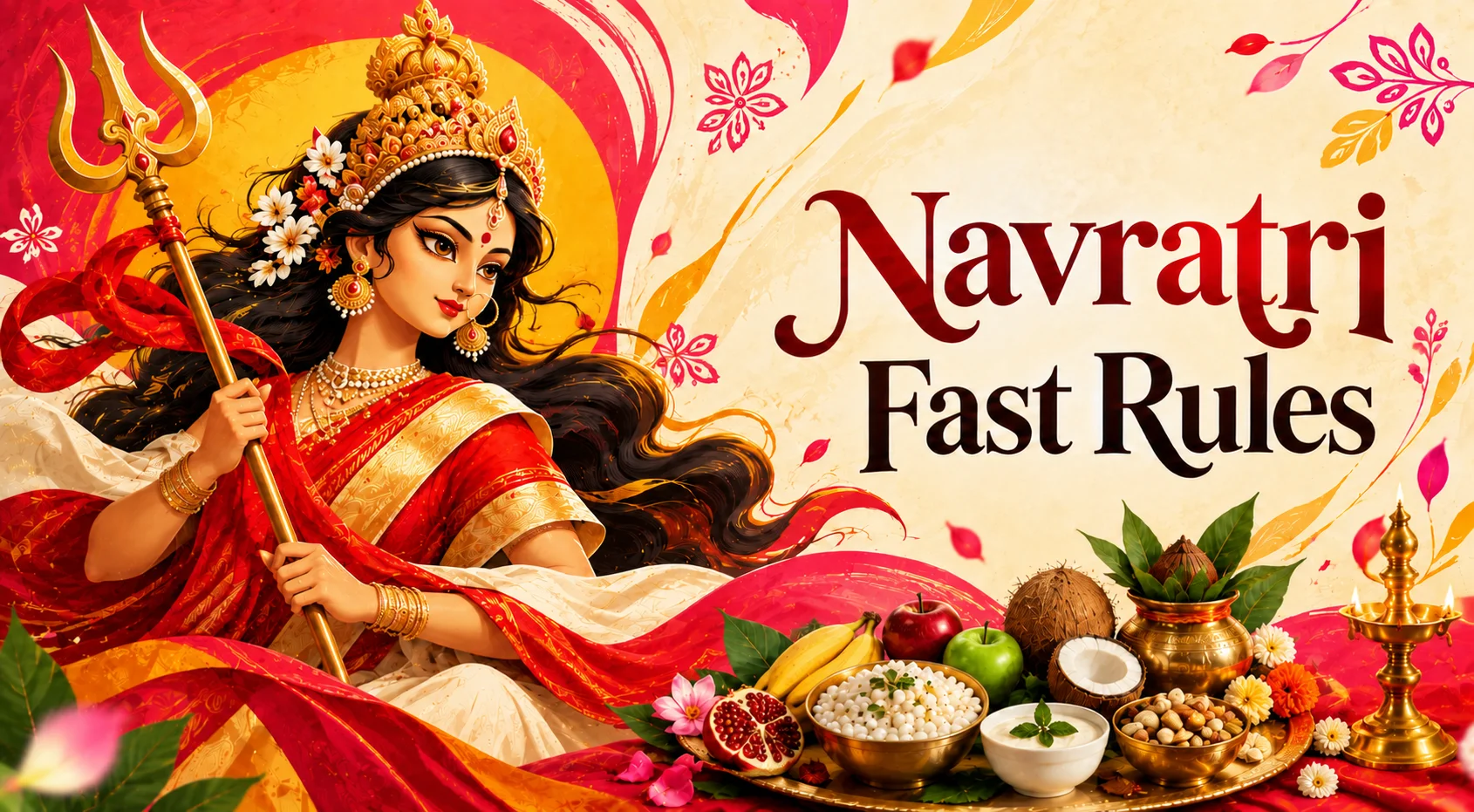
Navratri is a great time for devotees to worship Maa Durga's 9 avatars by observing a 9-day Navratri fast and honoring the victory of good over evil. By following Navratri fast rules, people detoxify their mind, body, and soul and foster higher spiritual consciousness.
During these nine days, certain foods are excluded from the diet, and devotees eat only the allowed items (pure sattvic). This guide will help you observe the fast with right Navratri 9-day fast rules, including what to eat and avoid, how to break the fast, and common mistakes to keep in mind.
Navratri Fasting Rules
During Navratri, fasting is observed as a spiritual practice to cultivate discipline, devotion and purity. While the specific customs may differ among families and regions, devotees generally follow these principles during the nine-day vrat.
1. Observe the Fast with Devotion and Discipline
Navratri vrat is not only about changing eating habits but also about developing self-control and focusing the mind on devotion. Devotees observe the fast according to their health, capacity and personal tradition.
2. Maintain Purity in Thoughts and Actions
Along with fasting, devotees focus on positive thoughts, peaceful conduct, prayer and spiritual activities to enhance their connection with the Divine.
3. Avoid Intoxicants and Unnecessary Indulgence
During Navratri, devotees generally avoid intoxicating substances and habits that disturb mental and spiritual balance.
4. Engage in Spiritual Practices
Many devotees spend more time in chanting, reading scriptures, meditation and worship during these nine days.
What to Eat and What to Avoid During Navratri Fast
Navratri vrat rules differ by region and family, so below are common Navratri items you can eat, along with essentials to avoid during the fast.
| CATEGORY | WHAT TO EAT | WHAT TO AVOID |
|---|---|---|
| Grains and Flours | Kuttu atta (buckwheat flour), singhara atta (water chestnut flour), rajgira atta (amaranth flour), sama rice (barnyard millet), sabudana (sago). | Wheat, rice, refined flour (maida), gram flour (besan), semolina (sooji), oats. |
| Fruits | Bananas, apples, pomegranates, papaya, grapes, watermelon, coconut, and other fresh seasonal fruits. | Packaged juices with added sugar or preservatives. |
| Dairy | Milk, curd, buttermilk, paneer, ghee, butter. | Flavored or packaged dairy products with non-vrat additives. |
| Vegetables | Potatoes, sweet potatoes, pumpkin, bottle gourd (lauki), cucumber, colocasia (arbi), yam (suran), raw banana. | Onion, garlic, mushrooms. |
| Spices and Salt | Rock salt (sendha namak), cumin, black pepper, green cardamom, ginger, green chili. | Regular table salt, turmeric, asafoetida (hing), mustard seeds, fenugreek seeds, garam masala, coriander powder. |
| Oils and Fats | Ghee, groundnut oil, coconut oil (in some regions). | Refined oils and mustard oil (avoided in many families). |
| Nuts and Seeds | Almonds, cashews, peanuts, makhana (fox nuts), melon seeds (magaz), raisins, dates. | Roasted or salted snacks made with regular salt. |
| Sweeteners | Sugar, jaggery, honey. | Artificial sweeteners and packaged sweets with non-vrat ingredients. |
| Pulses and Legumes | None | All lentils, chickpeas, kidney beans, and other legumes. |
| Drinks | Water, coconut water, lemon water, buttermilk, lassi, milk, fruit smoothies. | Alcohol; limit tea and coffee, as they can cause dehydration. |
| Non-Veg | None | Meat, fish, eggs, and alcohol (strictly avoided). |
Regional and Family Variations
| ITEM | Where It Is Commonly Allowed | Where It Is Commonly Avoided |
|---|---|---|
| Turmeric (haldi) | Some families and regions | Many households avoid it |
| Tomato and coriander leaves | Some households | Many households avoid them |
| Asafoetida (hing) | A few regions | Most households avoid it |
| Tea | Allowed in many homes | Health sources advise limiting it |
| Ginger and green chilli | Widely allowed | Some families avoid them |
| Coconut oil | South and coastal regions | Less common in North India |
| Sabudana (sago) | Widely allowed | Avoided in some strict fasts |
Different Ways to Observe the Navratri Fast
Below are types of fasting you can perform this Navdurga festival:
1. Nirjala Fast
Fasting without having water and/or food for a day, i.e., on Ashtami or on Navami tithi. This observance follows the strictest Navratri fasting rules and is advisable only for healthy individuals.
2. Phalahar Fast
In this type, devotees fast by consuming fruits, milk, curd, and water for nine days. This is a good way to detoxify the body and give it a break from grains, pulses, and other foods that hinder spiritual growth.
3. Sattvic Diet
In this observance, you can eat all fasting foods, and you must avoid grains, meat, alcohol, and other tamasic foods. This type has the easiest Navratri vrat rules and is suitable for all age groups for all nine days.
4. One-Day Meal
The most popular Navratri fasting observance, in which devotees eat one full cooked grain meal once a day, generally consumed after the evening puja. This type is mainly observed by young adults and older practitioners.
Navratri Fasting Rules for Married Couples
As a married couple, if you and your partner are planning to keep this year’s Navratri fast, then you should follow some Navratri vrat rules for couples written below:
Rule 1: Practice Brahmacharya
For nine days, both of you should practice self-control and abstain from any physical intimacy so you can focus on spirituality and purity during the fast.
Rule 2: Worship Together
If you are married, do morning and evening puja together during Navratri, as it strengthens spiritual harmony and mutual understanding between you two.
Rule 3: Emphasize Simplicity
While keeping the fasts, avoid cutting hair or nails or applying any chemicals on your face. Sleep on clean sheets, and if you can both sleep on the floor as in traditional times, that would be best.
Rule 4: Respect and Avoid Intoxication
Do not fight, speak bad language, or say harsh words to each other while keeping the Navratri fasts. Also, do not bring any intoxicants into your home.
Rule 5: Together Charity
During Navratri, feed poor people on the roadside and offer essential items to the needy; if you can, support the education of young girls, which is a way of directly serving Maa Durga. This will make your married life even happier and will lead to a good after life.
How and When to Break the Navratri Fast
To break the fast, follow proper Navratri fast rules and steps listed below to complete your observance with utmost devotion.
- 01
Break Your Daily Fast After Evening Aarti and Bhog
·आरती और भोगEnd your daily fasts in the evening, after performing aarti and offering bhog to Maa Durga.
- 02
Choose the Day to End the Nine-Day Fast
·कन्या पूजनEnd the final ritual of breaking the fast on Ashtami or Navami, as per your family traditions, after performing Kanya Pujan.
- 03
Begin with Prasad and Eat Light
·प्रसादAfter the necessary rituals, first have the prasad (bhog offered to Maa Durga), then eat light food like fruits, soaked nuts, and yogurt, and then eat grain food slowly.
- 04
Avoid Overeating
·संयमDo not eat too much, as after nine days of fasting your body needs time to return to its natural digestive state; overeating can lead to stomach problems.
Common Mistakes to Avoid During Navratri Fasting
Below are some mistakes to keep in mind while fasting in Navratri:
- Relying on deep-fried vrat snacks like sabudana vada and pakoras
- Drinking too little water throughout the day
- Overloading on potatoes and sugary sweets
- Turning the fast into a feast of elaborate dishes
- Ignoring dizziness, weakness, or fatigue
- Changing your fasting routine midway
- Judging or criticizing how others observe their fast
- Spending fasting hours on scrolling and gossiping
FAQs
Conclusion
Keeping Navratri fast is a sincere way to show respect and love to Maa Durga. Whether you are fasting alone, with family, or with a partner, follow the Navratri fast rules above to keep your observance pure and truly devotional.
Fast as your health allows, and let’s welcome Maa Durga’s grace into our lives and offer Her something truly exceptional from the depth of your heart.
Share this article
Help spread awareness about seva and the power of compassionate service.