What is Snana Purnima?
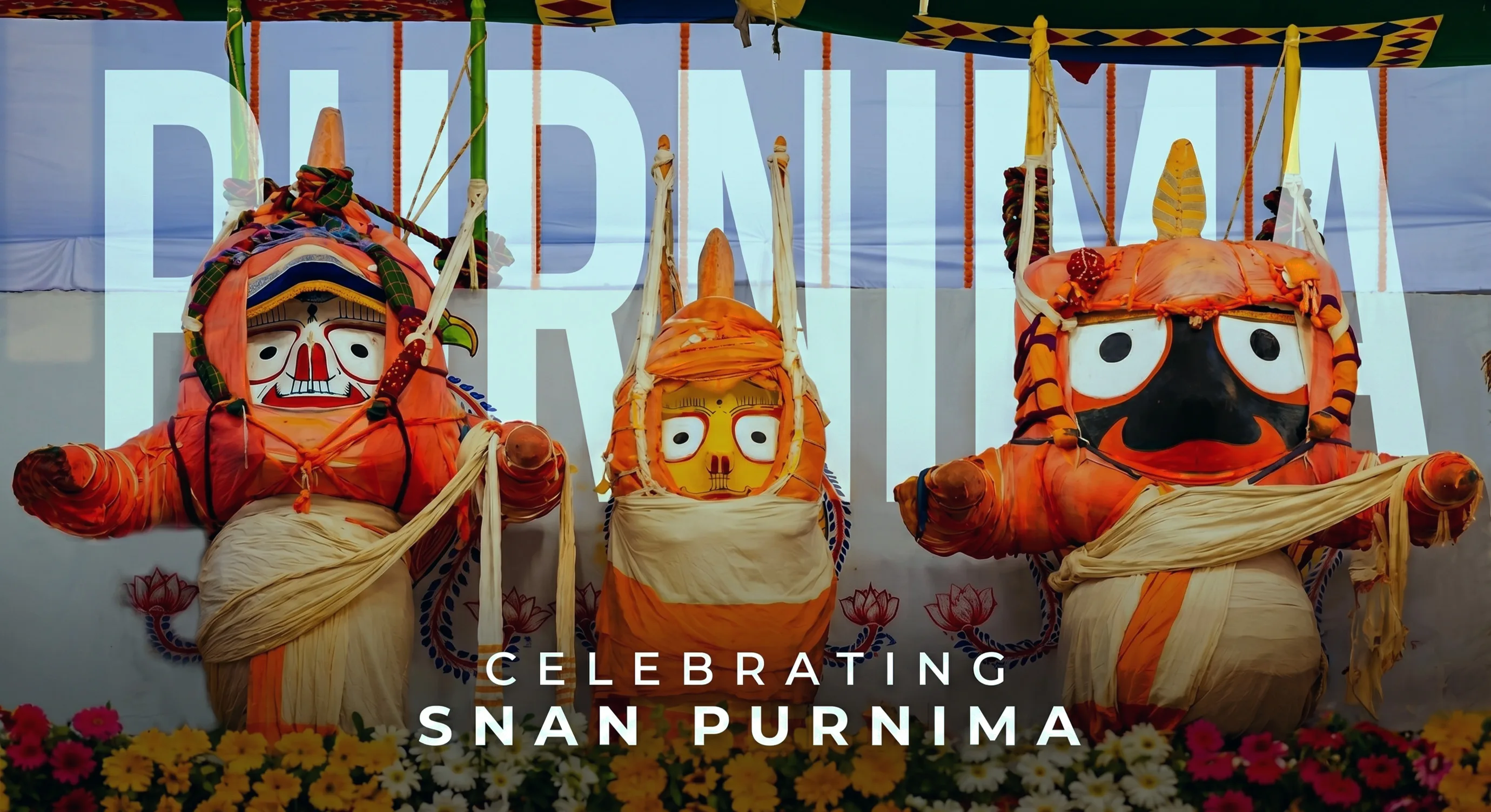
Snana Purnima, also known as Snana Yatra or Deva Snana Purnima, is celebrated every year on the full moon day, Purnima, of Jyeshtha month. This divine ceremony, held at Jagannath Puri, attracts devotees from different parts of the globe to attend the bathing festival of Lord Jagannath, Lord Baladeva, and Mother Subhadra, with 108 pots of sanctified water.
Snana Purnima 2026 Date and Time
This year, Snana Purnima is celebrated on June 29. The tithi begins from brahma mahurat, and the bathing ceremony starts early in the morning, bringing the deities to the Snana Bedi.
| Tithi/Muhurat | Time |
|---|---|
| Purnima Tithi Begins | 3:06 AM on June 29, 2026 |
| Purnima Tithi Ends | 5:26 AM on June 30, 2026 |
| Shubh Muhurat / Sacred Bath Time | 04:08 AM to 04:50 AM |
| Abhijit Muhurat | 11:56 AM to 12:51 PM |
Significance of Deva Snana Purnima
Deva Snana Purnima is observed as the appearance day of Lord Jagannath. On normal days, the Lord stays in the temple, but this day becomes special because the Lord comes out in an open area called the Snana Bedi and becomes visible to everyone who has come to see him.
This snana, or bathing ceremony of the Lord, fills the devotees with deep love and strengthens their devotion. By attending this ceremony, everyone gets purified.
After completing the bathing ceremony, Lord Jagannath, along with Baladeva and Subhadra, falls ill, and the deities are taken into a secluded place for about 15 days. The devotees, not able to see the Lord, feel separation. This period is called Anavasara, which means without the service.
A special group of pujaris takes the Lord’s complete care, applies herbal remedies, and repaints them. After 15 days, the deities reappear on the occasion of Rath Yatra, and devotees are very eager to see a glimpse of the Lord.
The Story Behind Snana Yatra
There was a king named Indradyumna who ruled over the Malava Kingdom. He was not only a great king but also a devotee of Lord Vishnu. Lord Vishnu in the form of Nila Madhava was worshipped secretly in the forests of Odisha by a tribal chief named Vishvavasu. The king had an intense desire to get the darshan of Nila Madhava, so he sent his priest Vidyapati to the forest.
By divine arrangement, Vidyapati married Vishvavasu’s daughter, and the tribal chief agreed to show the deity of Nila Madhava to him, but covered his eyes. Vidyapati secretly kept mustard seeds and dropped them along the path. When Vidyapati saw the Lord, he was overwhelmed with devotion and returned to the king to describe the Lord's beauty.
When the king arrived, the deity disappeared into sand, and in its place, a large log of sacred wood, the daru, washed ashore at Puri. The distressed king prayed to have darshan of the Lord. The Lord came in his dream, instructed him to build a temple, and also revealed that he would manifest in the same wooden log.
Vishwakarma took charge of carving the wooden log, on the condition that no one should come into the room until the work was finished. After some days, the sound of carving stopped. Queen Gundicha became anxious and urged the king to open the door. Unable to resist her request, the king opened the doors, and the carpenter vanished. He saw three forms, Lord Jagannath, Baladeva, and Subhadra, which were unfinished.
Brahma assured the king that the carving work was finished and the Lord had assumed these forms. It is stated in the Skanda Purana that King Indradyumna arranged the very first bathing ceremony when the deities were installed at Puri. From this day, every Jyeshta Purnima is celebrated as Snana Purnima or the appearance day of Lord Jagannath.
108 Gara Snana Purnima
The word Gara refers to a pot or pitcher, so “108 Gara” means 108 pots of water, which is used for the bathing ceremony. The water is taken from a specific well called Suna Kua, near the northern gate of the temple, the night before the ceremony.
Temple servants go in a ceremonial march to draw water from the well. The water filled in each pot is sanctified by mixing it with sandalwood paste, flowers, turmeric, and herbs, along with chanting Vedic mantras.
Out of 108 pots, 35 are poured over Lord Jagannath, 33 over Lord Baladeva, 22 over Mother Subhadra, and the remaining 18 over Sudarshan. The leftover holy water from the pot is distributed to the devotees.
Once the deities are bathed with all 108 pots, their color fades, and it is believed that they've fallen ill. Till the Rath Yatra, the deities are out of the sight of devotees, and this period is known as Anavasara.
Snana Purnima - Do’s and Don’ts
Do
- Get up in Brahma Muhurat, take a bath, and wear fresh clothes.
- Recite prayers and chant the name of the Lord, especially Hare Krishna Mahamantra.
- Hear and talk about the pastimes of Lord Jagannath and engage others also.
- Offer tulasi leaves, flowers, fruits, or water to the Lord.
- Visit Jagannath temple if possible; if not, then do some seva for the temple.
Don't
- Avoid wearing unwashed clothes.
- Do not waste time hearing topics not related to the Lord.
- Do not criticise any devotee, temple, or religious practices.
- Do not offer or eat food that is tamasic in nature.
- Avoid visiting places that do not have any connection to the Lord.
What Happens After Snana Yatra? (Anasara Period)
After Snana Yatra, the Lord falls ill, and devotees take complete care of the Lord to be cured. This period is called the Anasara period, or the period when the Lord is out of the vision of the devotees. A group of special priests takes care of him; everyone feels intense separation from the Lord, remembering and chanting his name throughout the day.
The deities of the Lord are replaced by Patta Chitra paintings, and they are taken to a secluded place called Anasara Pindi, where priests treat them with herbal medicines and a specific fruit diet. The paint fades after a bath, and the deities are given a fresh coat of paint.
It is also believed that the Lord appears at Alaranath during this period, so many devotees also visit this place. The 16th day is celebrated as Netrotasava, when the Lord comes out from seclusion and gives darshan to the devotees. The devotees, filled with joy and love, are very eager to see their Lord.
After Netrotasava, Rath Yatra begins, and on this day, Lord Jagannath is extremely merciful because he himself comes to see his beloved devotees. Everyone takes part in pulling the ropes of the rath, chanting the Lord’s name throughout the way.
Srila Prabhupada often says that anyone who participates in this festival will gradually develop his dormant love for Krishna. By his divine grace, Rath Yatra is carried out not only in different cities of India but also in foreign countries as well.
Conclusion
Snana Yatra is one of the most revered festivals in the Jagannath tradition. This festival strengthens the relationship between the devotee and the Lord. It covers everything: the joy of closeness, the ache of separation, and the promise of reunion.
The period of Anavasara tells us that the Lord is always with his devotees in the form of his Holy name, pastimes, and glories. Thus, these festivals are for our purification and upliftment in our spiritual journey.
Share this article
Help spread awareness about seva and the power of compassionate service.