
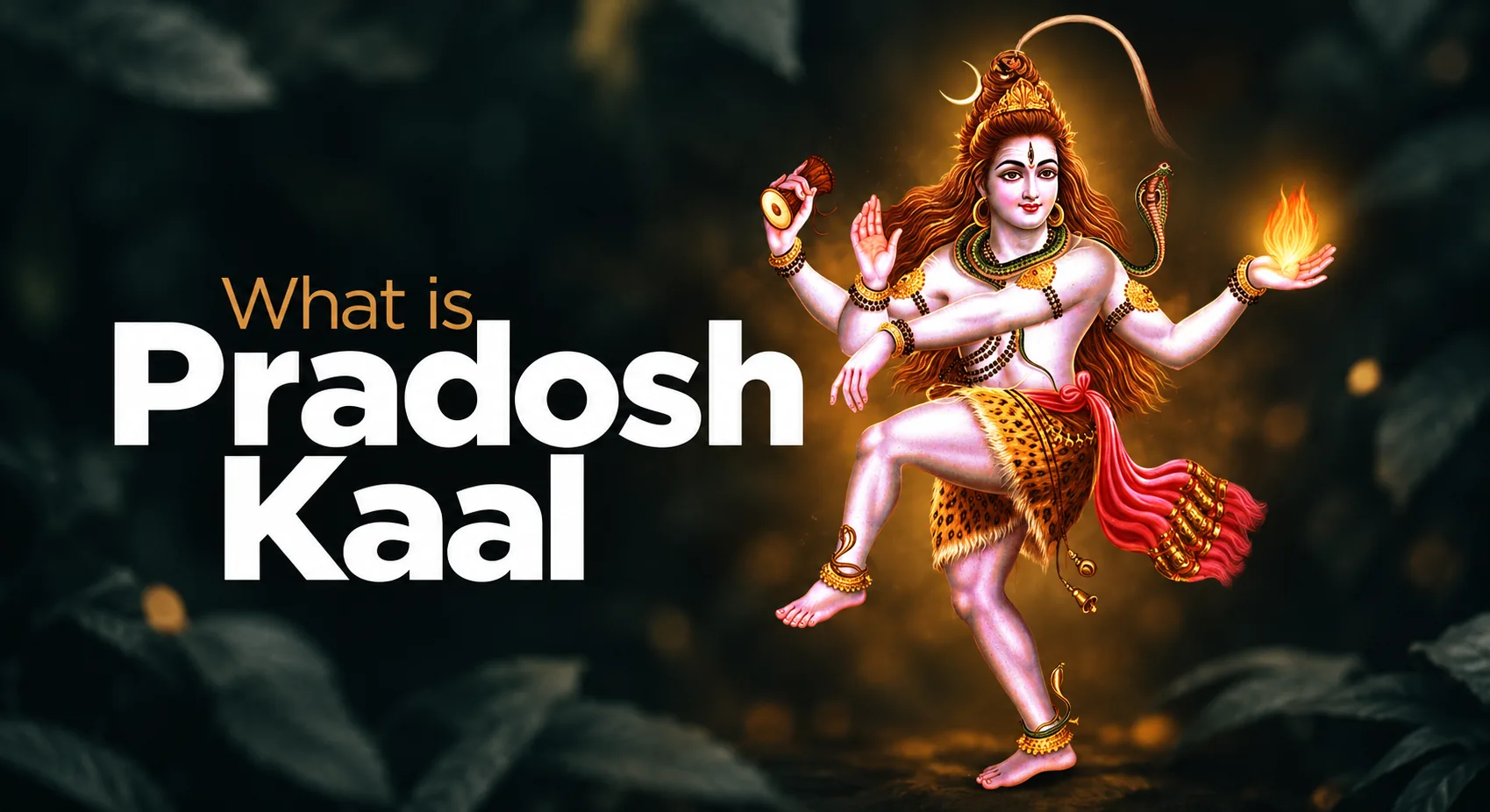
Pradosh kaal is an auspicious period when many pujas and vrats are observed, though its timing varies by location. So, when does it begin and actually end?
In this guide, we will cover the meaning of Pradosh kaal, when to observe it, why it matters, how it differs from Pradosh Vrat, and simple ways to make the most of this time.
What Is Pradosh Kaal?
In Sanatan Dharma, Pradosh Kaal is the evening twilight period that marks the transition from day to night (Sandhya Kaal). Devotees traditionally worship, chant, and offer prayers during this time to receive blessings and connect with the divine.
When Does Pradosh Kaal Start and End?
Scriptures like the Skanda Purana describe Pradosh Kaal as “Pradosho Rajanimukham,” meaning the mouth (beginning) of the night. According to traditional calculations, it starts slightly after sunset and lasts for 6 ghatis (2 hours and 24 minutes).
Pradosh Kaal Significance
Pradosh Kaal is considered sacred for several reasons, each one described below:
- Lord Shiva Cosmic Dance: The Shiva Purana describes how, during this twilight time, Lord Shiva performs His Ananata Tandava on Mount Kailash.
- Energy Balance: This period is believed to remove sins and balance solar and lunar energies.
- Relief of Devtas: During Samudra Manthan, this sacred window allows all the devtas to seek Lord Shiva's help to protect them from the demons.
What Is the Difference Between Pradosh Kaal and Pradosh Vrat?
Pradosh Kaal is a specific auspicious time, while Pradosh Vrat is a full-day fast observed to honor Lord Shiva and Goddess Parvati.
| Pradosh Kaal | Pradosh Vrat |
|---|---|
| Occurs every single day at sunset | Occurs twice a month in Shukla and Krishna Paksha |
| This time is dedicated to worship, lighting a diya, and self-reflection. | While observing Vrat on Pradosh, devotees fast from sunrise to sunset, visit Lord Shiva temples, and perform Abhishekam. |
| Fasting is not a part of this moment | Fasting is the main ritual of this observance |
Conclusion
Pradosh Kaal is an opportunity for all of us to worship and to show our devotion with faith and gratitude towards the Lord. Whether you observe Pradosh Vrat or just observe the divine window, maintain purity throughout.
Share this article
Help spread awareness about seva and the power of compassionate service.