
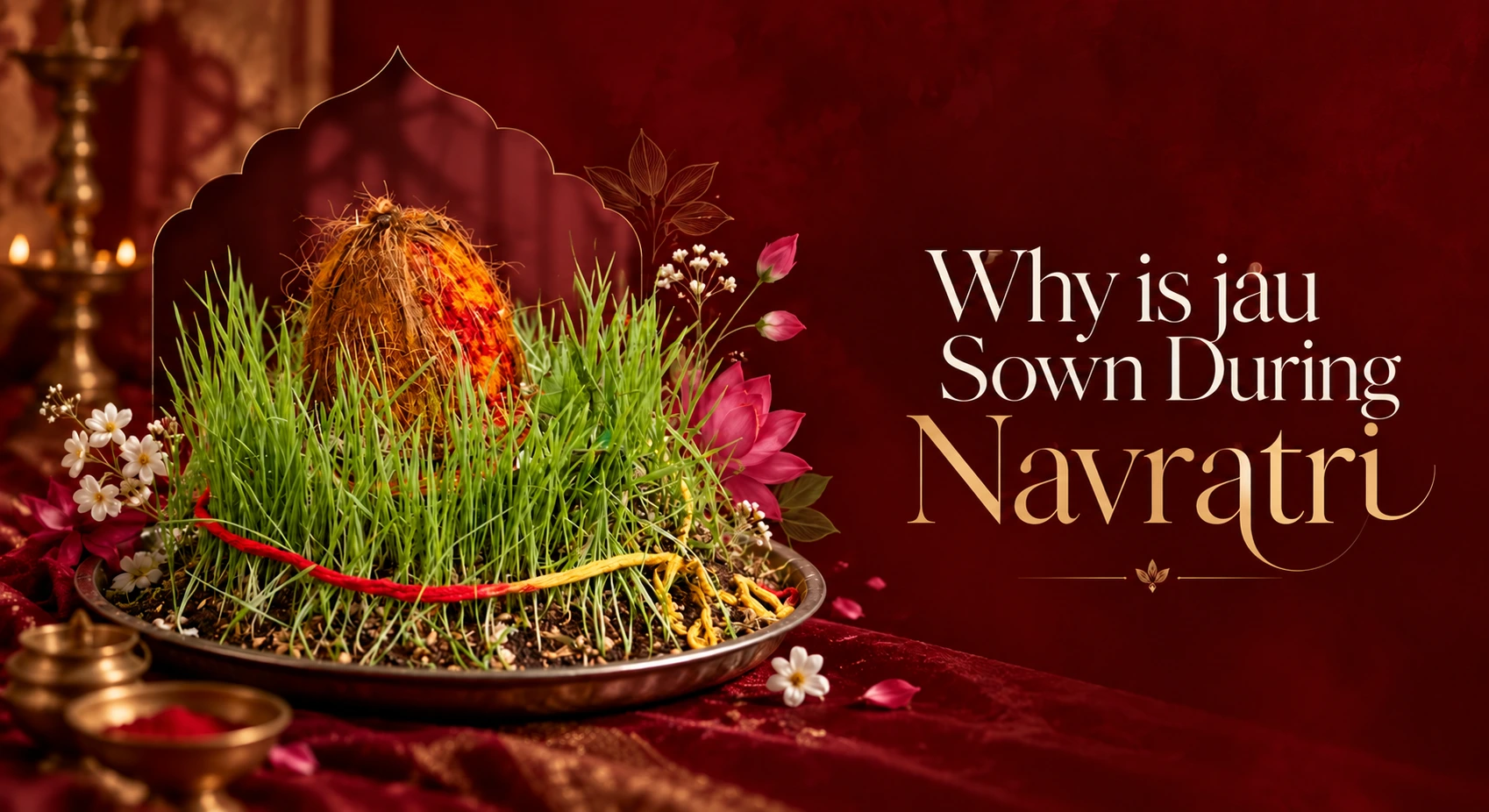
Why is jau sown during Navratri? This is the most-asked question among devotees during the nine-day festival. Jau is revered as the symbol of new life and growth and invites the Goddess's blessings into your home.
In this blog, we’ll explain the reason and significance behind this tradition and what to do with it after the festival.
Why Is Jau (Barley) Sown During Navratri?
The sowing and growing Jau significance in Navratri had several reasons, tracing back traditionally:
1.Traditional Wisdom:
From our ancestors to our parents, everyone practised this ritual, which became one reason behind this tradition. During Ghatasthapana, devotees sow barley seeds in an earthen pot of soil, after which the first day of Navratri worship begins.
2. Mythological Factor:
Scriptures like the Devi Saptashati , highlight the significance of jau in Navratri. Lord Rama vowed to the 9 forms of Goddess Durga, sowing barley seeds in a Kalash. After 9 days, the barley grew, offering blessings and helping Rama defeat Ravana on the 10th day.
3. Health and Medicinal Factor:
Another reason behind sowing jau in Navratri is its scientific and medicinal qualities. Barley is nutrient-rich and believed to support blood and oxygen and acts as a Natural detoxifier, empowering immunity with vitamins like A,C,K and B-complex.
What Does Jau Symbolise in Navratri Rituals?
The ritual of sowing barley in Navratri rituals symbolises growth, fertility and abundance. As per ancient beliefs and traditions, as first cultivated crops it reflects abundance and food security.
Barley shoots are also believed to represent the inner peace and growth in spiritual terms, as just like the seed transforms into a plant after taking care of it for 9 days, similarly the devotees' devotion grows if one has pure faith, patience and positivity.
What Is Done with Jau After Navratri?
After Navratri, the Jau is being used differently depending on family beliefs and traditions across regions. Some distribute it as prasad and keep it on head after the Ashtami or Navami day puja. Others consider water immersion, placing it under a peepal tree or banayan tree, keeping it in a wealth locker as a blessing, or feeding it to a cow.
Conclusion
Sowing Jau is an important ritual, which empowers your devotion and worship over the nine days of Navratri. Whether you are performing this ritual as part of your family tradition, or for the first time as your own belief, just keep the intention pure, as if done with faith it is said Maa Durga blessings come with them after 9 days.
Share this article
Help spread awareness about seva and the power of compassionate service.