
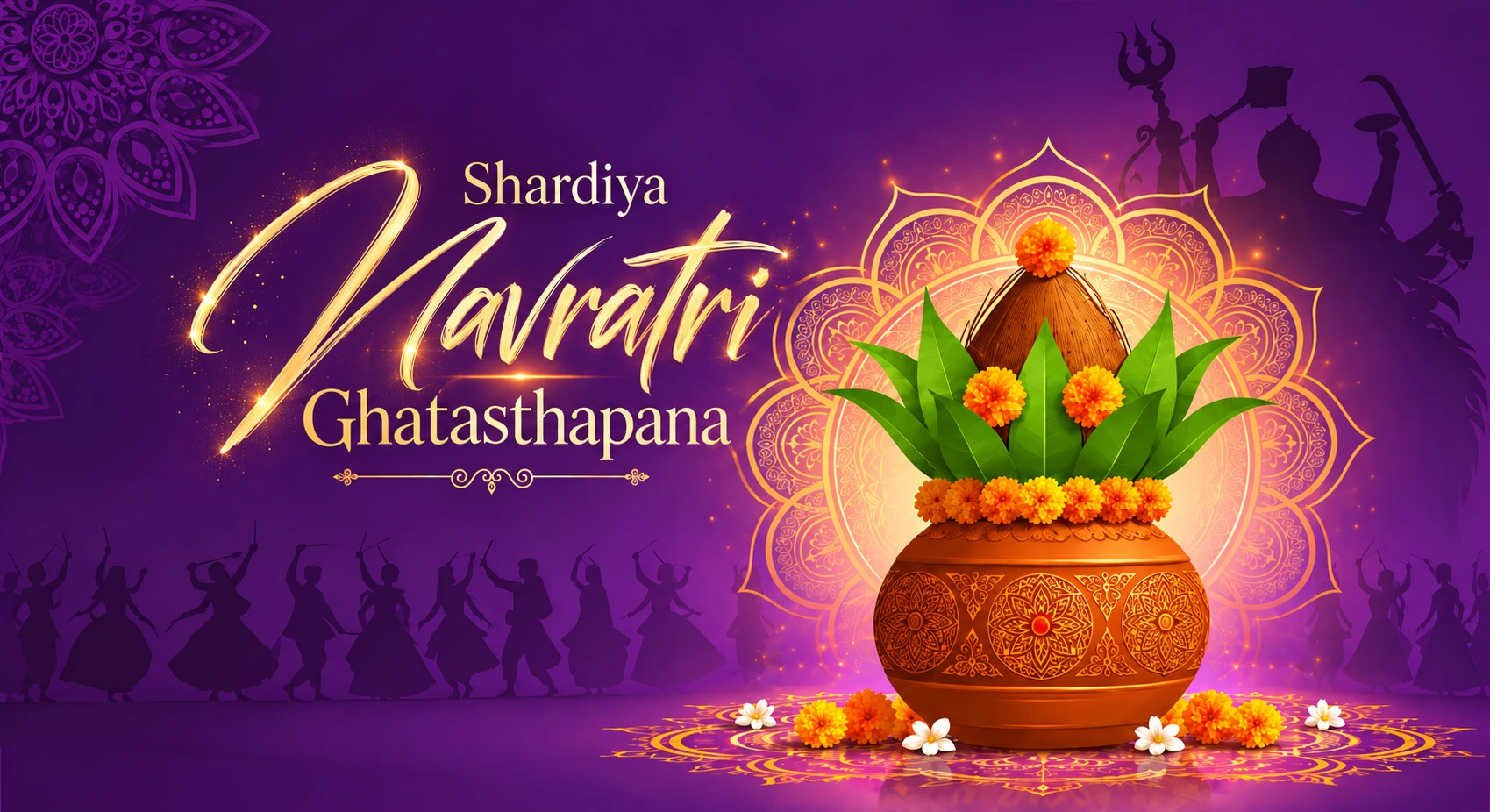
When should you perform Ghatasthapana during Shardiya Navratri 2026? With different timings being shared for Kalash Sthapana, choosing the right muhurat can leave devotees confused as they prepare for the festival.
Following Pitru Paksha, Shardiya Navratri brings a much-awaited time of prayer, fasting and worship of Maa Durga. Ghatasthapana marks the beginning of these observances, making its timing and preparation an essential part of your Navratri puja.
Understanding the muhurat, tithi and puja procedure can help you begin your worship with confidence and devotion. Read on to find the Navratri Ghatasthapana 2026 date and muhurat, the required samagri, and a step-by-step guide to Kalash Sthapana at home, including the daily worship practices to follow afterwards.
Navratri Ghatasthapana 2026 Date and Muhurat Timing
Shardiya Navratri Ghatasthapana falls on Sunday, 11 October 2026. The table below gives reference timings in Indian Standard Time (IST). Ghatasthapana and Abhijit muhurat windows vary by location; these reference windows are not a single schedule for all of India. Confirm the applicable muhurat in your local panchang.
| Ghatasthapana Details | Date and Time |
|---|---|
| Navratri Ghatasthapana Date 2026 | Sunday, 11 October |
| Navratri Ghatasthapana Muhurat 2026 | 6:19 AM – 10:12 AM (Approx. 3 hrs 52 minutes) |
| Navratri Abhijit Muhurat 2026 | 11:44 AM – 12:31 PM (47 minutes) |
| Navratri Pratipada Tithi 2026 | 9:19 PM, 10 October - 9:30 PM, 11 October |
| Navratri Chitra Nakshatra 2026 | 10:32 PM, 11 October |
| Navratri Vaidhriti Yoga 2026 | 9:05 PM, 11 October |
What is Ghatasthapana and why is it Performed During Navratri?
Navratri Ghatasthapana (Kalash Sthapana) is a central Navratri ritual performed on Pratipada tithi, marking the beginning of the sacred nine-day period. In this tradition, a kalash is established according to the family's beliefs to invoke Goddess Durga's divine grace and invite Her into our homes.
This ritual is done during Navratri because of its symbolic representation. The kalash represents the cosmic universe, containing every living being in it. Filling it with holy water, mango leaves, and a coconut reflects purity, auspiciousness, and Goddess Durga's physical form through which her presence is invoked.
Shardiya Navratri Ghatasthapana Puja Samagri List
Below is the list of items that you will need to perform the Ghatasthapana ritual in 2026:
| Samagri | Purpose |
|---|---|
| Wide clay tray/ plate | Base for sowing barley |
| Clean soil | For preparing the grain bed |
| Barely (jau) | Sown on the day of Sthapana |
| Clay/copper/brass kalash | Vessel for invoking the Goddess |
| Ganga jal or clean water | To fill the kalash |
| A coin | Placed inside the kalash |
| Supari (betel nut) | Placed inside the kalash |
| Akshat (uncooked rice) | For the kalash and tilak |
| Moli/Kalava (sacred thread) | Tied around the neck of the kalash |
| 5 mango leaves | Placed at the mouth of the kalash |
| Coconut (whole, unpeeled) | Placed on top of the kalash |
| Red cloth | To wrap the coconut and cover the chowki |
| Chowki (wooden platform) | To place the kalash on |
| Goddess Durga image or idol | Centerpiece of the puja space |
| Diya (for the Akhand Jyoti) | Lit on the day of Sthapana |
| Ghee or sesame/mustard oil | Fuel for the diya |
| Roli/Kumkum | For tilak |
| Red flowers | For offering |
| Dhoop, incense sticks, camphor | For the puja |
Step-by-Step Navratri Ghatasthapana Vidhi at Home
The Navratri Ghatasthapan puja vidhi varies by region and family tradition. However, below is the most common step-by-step procedure you can follow:
- 01
Wake and Clean
On the first day of Navratri, wake up early, bathe, wear fresh clothes, and clean the puja corner of your home where you will place the kalash and deity image.
- 02
Prepare the Soil and Sow Barley
Take an earthen pot and put on a clean layer of soil. Then sow the barley seeds over the soil, cover them tightly with soil again, and sprinkle a little water.
- 03
Set up the Kalash
Take the kalash and fill it with holy water; dip in a few grain seeds, a coin, uncooked rice, and other items as per your family traditions. On top, tie mauli, the sacred thread, and place mango leaves and a coconut wrapped in red silk cloth.
- 04
Invoke the Goddess
Now place the kalash in front of the idol image or deity and sit in proper silence, keeping your eyes closed. Invite Goddess Durga to come to your home this Navratri with sincere devotion.
- 05
Light the Diya
Light the ghee diya and incense sticks and take sankalpa for your Navratri observance in your name and gotra. Add ghee from time to time so the diya can stay lit throughout the festival (Akhand Jyoti).
Shardiya Navratri Kalash Sthapana Rules
Now, after performing the puja ritual of Kalash Sthapana, there are some required rules you should follow for the upcoming nine days:
- 01
Kalash Should Remain in One Place
Remember not to move the kalash for nine days from the place where you perform the invocation ceremony. Moving it to somewhere else is considered inauspicious.
- 02
Maintain Cleanliness and Purity
Maintain purity regularly for the nine days; do not clean the space only on the first day and leave it dirty for the remaining days.
- 03
Someone Should Always Be Home
Do not leave the house empty; ensure someone is present, as you have invited Goddess into your home, and leaving it alone means leaving Maa Durga alone and unattended, which is believed to be a bad ritual.
- 04
Eat and Live Satvik
After doing Shardiya Navratri Ghatasthapana, live a pure, sattvik lifestyle for nine days. It is also necessary to be pure from the inside, so your worship and observance reach Maa Durga with faith and devotion. You can check our detailed guide about what to eat and avoid during the Navratri fast.
Importance of Jau (Barley) in Navratri Ghatasthapana
Growing Jau (Barley or kehtri) is an important part of Navratri Ghatasthapana puja vidhi, as it represents the first crop grown when the universe was formed. Sowing it symbolizes the prosperity and reverence for food in our lives.
Jau is sown on the Navratri Sthapana day, which also marks the worship of Maa Shailputri.
According to traditional beliefs, if it grows bright green, it is highly auspicious and reflects good fortune; if it comes in yellow, it is seen as a sign of caution and signals hard work coming your way.
What to Do After Ghatasthapana for Nine Days?
After the Navratri Ghatasthapana ritual, for the next nine days you have to follow some daily worship practices:
- Morning and Evening Puja: Offer daily prayers to the kalash and deity by lighting a diya.
- Offerings to the Kalash and Deities: Offer fresh flowers daily according to the specific Navratri day color, and put akshat on the kalash every day.
- Daily Bhog (Prasad): Before eating, always offer it to Maa Durga first; it should be pure, sattvic food.
- Recitation and Chanting: Sit in front of the kalash and chant the mantra Om Dum Durgayei Namah.
- Aarti: Perform aarti every day, in the morning and evening, with all your family members.
FAQs
Conclusion
Navratri Ghatasthapana, also known as Kalash Sthapana or Navratri Sthapana, is the traditional practice of welcoming Goddess Durga. Follow the proper sthapana rituals listed above in the article and celebrate Navratri 2026 with awakening Maa Durga’s grace.
From setting the kalash to following the daily rules, offer your devotion with pure faith and sincerity.
Share this article
Help spread awareness about seva and the power of compassionate service.